Priming the Pump

IMG_1537

The pump that wouldn’t pump

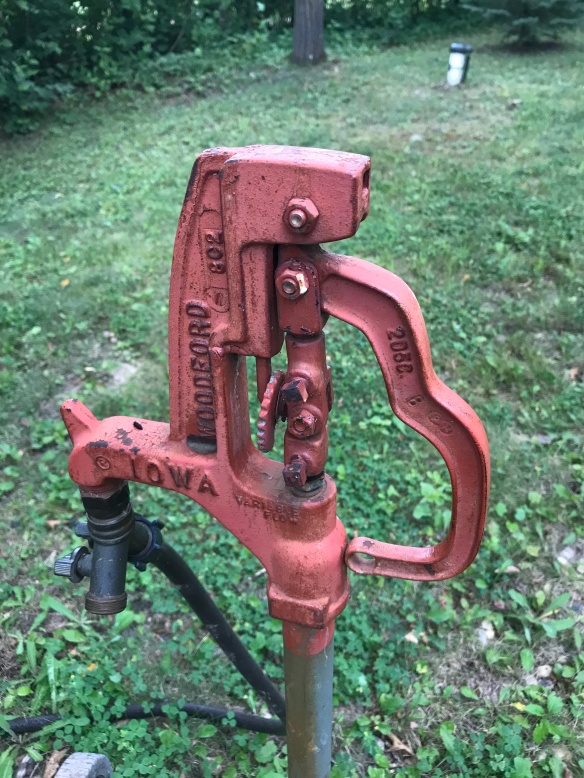
The outdoor pump at the cabin didn’t work this spring. It worked late last summer when we bought the cabin, but the spigot was bone dry this spring and into the summer. When I shared my tale of woe with the 10:00 AM gathering of Sylvan Shores residents, one of the men asked, “Have you primed the pump?”

City folks know nothing about priming the pump, except for the adage about getting something started. Sometimes, as during days and weeks when a writer has nothing to say, you need to prime the pump by reading or just shushing the distractions to get the water flowing again.

“How do you prime a pump?” I ask. What’s that?” Good natured smiles and laughter break out around the table.

“Well, do you have one well or two wells?”

“Got me,” I said. “All I know is when I pull up the handle, nothing happens. It worked last summer. How do I prime the pump?”

“You gotta pour water down it before the water will come up from the well. Just pour some water down the pump until it’s primed.”

Seemed simple enough. But there was no place on the red pump crank to pour water. Maybe I needed to take the handle mechanism off the top of the pipe in order to pour water into the pump, but it was rusted onto the pipe. The question about two wells led me to wonder.
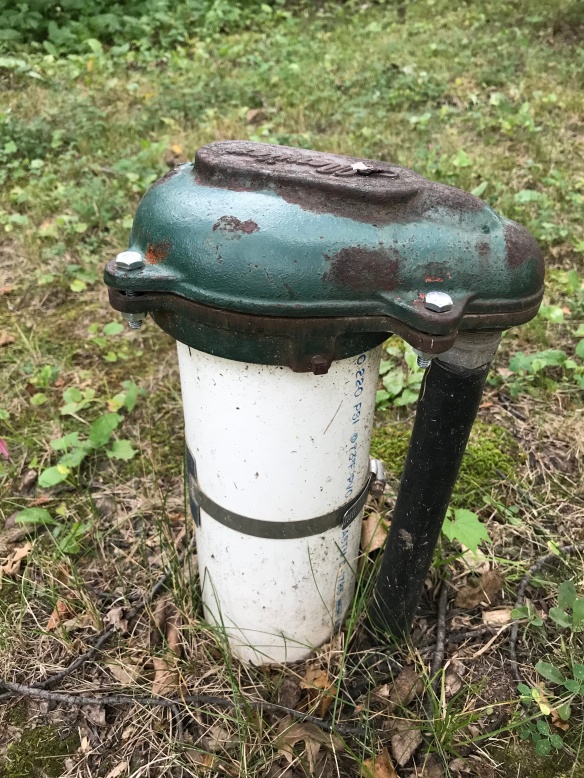
IMG_1536 I went back to the cabin and took the cap off the well that supplies water to the cabin’s indoor plumbing fixtures. What I found was an electrical system. Wires interconnected and programmed to pump the water from the well into wherever it was programmed to go. Since the well controlled electronically hadn’t been re-programmed, and the outside pump with the red handle wasn’t working, I concluded the pump in the yard had a separate well and that it needed to be primed. Or, perhaps, the hand-pumped well had gone dry over the winter.

Once again, I pumped the red handle up and down repeatedly with the same results. No water to water the shrubs and flowers. We were doomed. This pump wouldn’t prime!

Then Bud and JoAnne dropped by for an altogether unexpected visit. Bud wasn’t supposed to be out and about. He’d been homebound following quadruple by-pass surgery and serious complications that followed it. They hadn’t been at the coffee hour and, so far as I knew, didn’t know the story about my ignorance.

We pulled out a chair in the yard for Bud to sit. I told him about trying to prime the pump. “I don’t think there’s a separate well for that pump,” he said. “I think there’s just one well. Let me try it.”

Bud stood up, took hold of the red handle, and pulled it all the way up, and, like the rock that Moses struck in the wilderness of Meribah, the water gushed from the pump.

IMG_1534

The pump that pumped. No priming needed!

It was a miracle! There’d been no need to prime the pump. I just needed to force the handle all the way up, which I had feared doing lest I break it.

Now the Ninebark and the few flowers we planted are watered between rainfalls, and the miracle of the well that never needed to be pumped gives hope to a writer that one extra tug on the handle can get the water flowing again.

  • Gordon C. Stewart at the cabin, August 14, 2018.
The Dream of Brain Surgery

It was just a dream. Or was it?

1-The-Trial

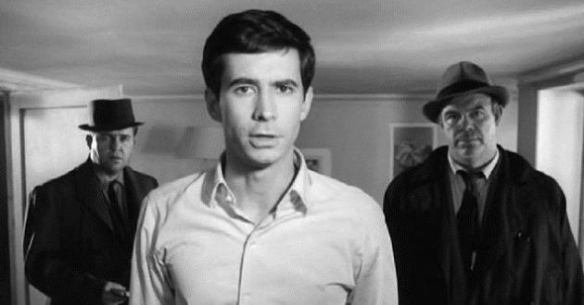
‘Josef K.’ in the film rendition of Franz Kafka’s The Trial

It woke me three nights ago, but it won’t go away. Against every conscious attempt to push it away, it is still demanding my full attention.

I had a headache that wouldn’t go away. A surgeon opened my brain and was pulling an animal from the side of my head: a big, brown rat, resisting the surprised surgeon’s efforts, and then another, while the other part of me in the dream watched and cringed. That was it. That was the dream.

From the time I was very young, nothing frightens me as much as a rat. I was five years old when I saw my first rat after the family moved into the 120 year-old house on Church Lane — the one with the open cistern and the huge hole in the basement wall. A rat would scurry across the kitchen floor after leaping from the kitchen cabinet my mother had just opened. At night I could hear the rats moving in the wall next to my bed in the upstairs bedroom. Occasionally a family cat would kill one and offer it to my mother as a present; the sight of the gift sent chills up my mother’s spine as much as if it had been alive. Mom was scared to death of rats. So was I.

The rats I learned to hate were not pet rats or the white rats of laboratory experiments. They were sewer rats who lived in the open cistern with the tunnel to our basement, like the beady-eyed creature that leaped at my father when he blew him out of the opening in the basement wall with a shotgun. I’ll be 76 in a few days, but in my mind, it happened yesterday. 

Which brings me back to the brain surgery dream three nights ago. The pain in my head came from the rat that lived there. The rat wasn’t leaping from a cupboard or scurrying through the walls; it lived inside my head. I was helpless to remove it. It took surgical intervention, and its presence in my head surprised the surgeon as much as the part of me that was observing the procedure.

The rat represents everything I don’t want to be. It’s ugly. It’s dirty. It’s sneaky. It’s vile. It doesn’t operate in the daylight. It does it’s business in the dark of night. And, if you don’t kill it, it may kill you. Even if you shoot it, it will leap for your jugular.

It doesn’t take a Jungian dream interpreter to “get” the symbolism of the rat inside my head. I have been, and still am, my own worst enemy. You can run from the evil inside you, but the guilt remains. Betrayal, deceit, denial, divorce, hiding in kitchen cupboards, scurrying in bedroom walls, living in the cistern beside the house where the human beings live.

I’ve long known the truth of Carl Sandburg’s poem “The Wilderness”: “O, I got a zoo, I got a menagerie, inside my ribs, under my bony head…”. Like the rest of the human race, I, too, have a wolf in me, and a fox, a hog, a baboon, a fish, an eagle, and a mockingbird in me. But I have an animal not listed in Sandburg’s menagerie. I got a rat inside my bony head.

Childhood fears never die. And, like a former pope who hated his predecessor so much that he became him, if one isn’t careful, one becomes what one fears and hates.

Where is the surgeon who can remove it? What practices can pull the rat from my head and the free me of the horror inside my ribs? Or, is the challenge to live with it the same way I’ve come to terms with the other members of the menagerie of me — to go face-to-face, eyeball-to-eyeball, and, after all these years of running from it, muster the courage to make friends with my own worst enemy?

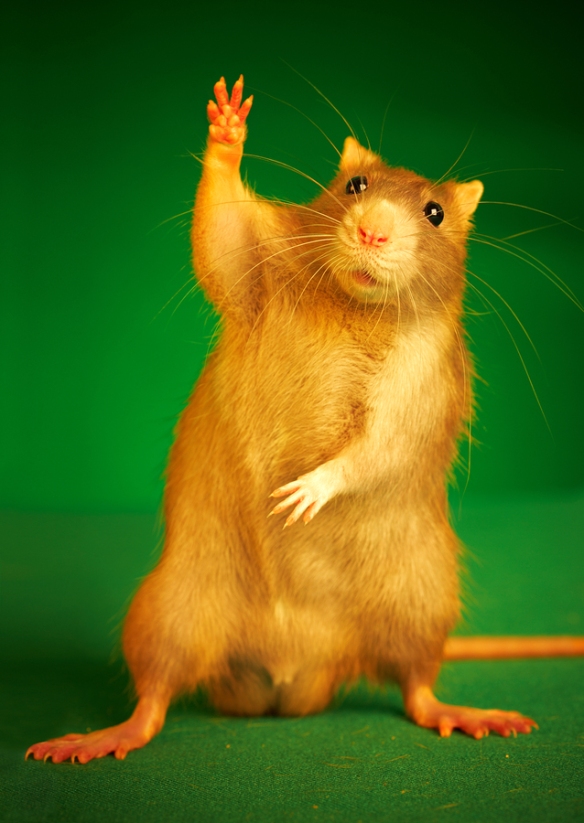
Rat on a green background

The rats of my childhood disappeared when the opening in the basement wall was closed with brick and mortar and the cistern was filled with concrete. It will take more than bricks and concrete to remove the one in my head, but the process has started, and for that, I’m thankful.

“The self is a relation which relates itself to its own self,” wrote Soren Kierkegaard in The Sickness Unto Death. I was both the subject and the object in the dream, the self relating to its own self. There is light in the darkness. Hope abounds.

Gordon C. Stewart, Chaska, MN, August 2, 2018.

Walking. Solus, with the Light-House.

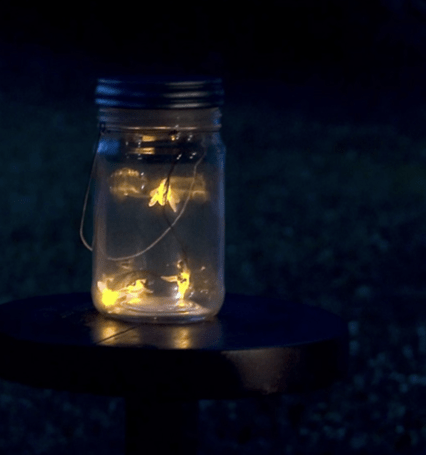
“This light-house, a single firefly illuminating the dark.”

Andrew familyLike the “single firefly” (a family on a front porch) in today’s I Can’t Sleep post, Andrew, Alice, and grandson Calvin are being more natural at the cabin this weekend. I’Il think of them in light of David Kanigan’s commentary (scroll down to read) and The Fireflies that lit up the pitch dark sky above the wilderness cabin almost a month ago.

  • Gordon C. Stewart, August 4, 2018.

Live & Learn's avatarLive & Learn

It was a week ago. An otherwise unforgettable day, but for a moment, a single firefly with its other worldly bioluminescence, which keeps circling back.

“Do you want a ride home?”

It’s a short walk home from the train station, ~2000 steps. One hour in the quiet car on Metro North didn’t quench it, the thirst for more solitude, more Alone, more decompression. I walk.

The torso leans forward, the feet step one-two-one-two.  Lean forward? A tip from a Youtube fitness coach who explained that it propels you forward. So I lean forward. If he told you to hop on your right foot and rub your stomach round and round with your left hand, you’d do it.

It’s humid. God, it’s Humid. Torso leans forward, thick air pushes back, slowing forward motion. Thunderheads build in the distance.

The neck tie is in my brief case. The slim fit button down…

View original post 312 more words

Elijah and Barclay’s Ball

Video

Some things bring a smile. This short clip of Elijah and our dog Barclay playing with Barclay’s ball is one of them. Turn up the volume and smile.


  • Grandpa Gordon with Grandma Kay, the movie producer. August 1, 2018

Elijah, the next Andrew Zimmern

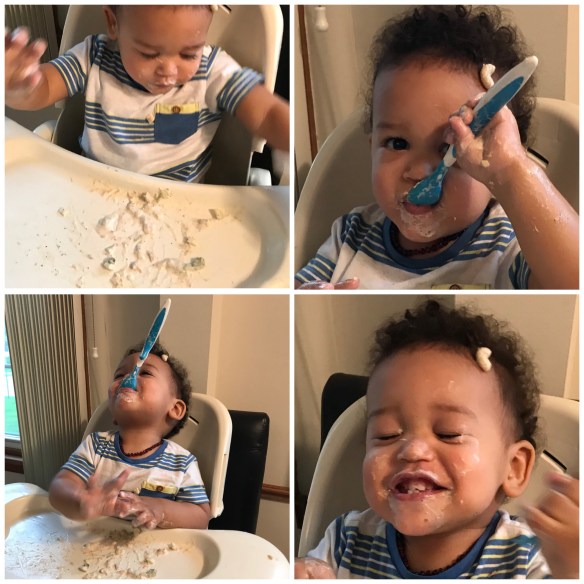
Elijah and his spoonJPG

Elijah and his spoon

Elijah has a palate like the host of Bizarre Foods with Andrew Zimmern. It doesn’t discriminate, and he LOVES food. His tastes are far-reaching and wide-ranging. Mexican? Chinese? German? American? French? Escargot or a grub or tasty earthworm from the lawn? It makes no difference.

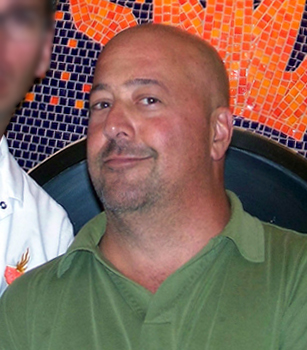
AndrewZimmern_crop

Andrew Zimmern

Like Andrew, who, BTW, lives in the same town, Elijah would try it. He loves it all.

The big news is that Elijah is eating with a spoon, as well as his fingers, and he’s proud of it! 

Who cares if he drops a few peas, or some applesauce, or gets a little food in his hair, or shares his spoon with the family dog!

  • Grandpa Gordon (‘Bumpaa’), Chaska, MN, July 31, 2018.


Elijah love and joy with Grandma

There’s love and there’s joy. The two go together. But not always. Sometimes love brings sadness. Likewise, sometimes joy — or, rather, what seems like joy (self-indulgent self-satisfaction — knows nothing of love. We live for the moments when love and joy are joined at the hip.

Elijah and Kay swing

Elijah and Grandma joined at the hip

This photo of Elijah and Grandma on the swing serves as a reminder that love and joy really do belong together. Could two people enjoy each other more than Elijah and his Grandma?

  • Grandpa Gordon, Chaska, MN, July 29, 2018


Elijah and his Cheerios with Grandpa

Elijah and his truck

14 month-old Elijah 

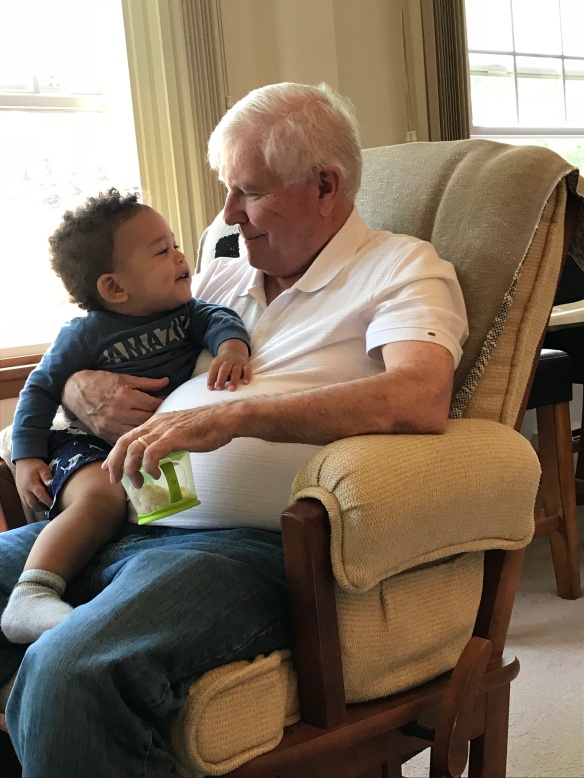
It’s been a while since Elijah and Grandpa had a conversation on Views from the Edge. Elijah celebrated first birthday in late May, and has had a lot to say to Grandpa (“Bumpaa”). His words continue to cheer me. But it’s his baby Cheerios that bring the greater joy. His actions speak louder than words.

Elijah loves Cheerios! He carries them around the house in a plastic cup, plunges his hand into the cup, and pulls out two or three Cheerios. He loves them almost as much as light sockets, computer wires, and the remote to the television. But, when he eats his Cheerios, no one tells him to stop.

Kay and I been out of town last week, enjoying a lovely week at the cabin in the low 70s with breezes from across the wetland, but we missed the little guy! Yesterday Grandma resumed her Friday routine of caring for Elijah. He ran to Grandma and threw his arms in the air asking her to picked him up before he went back for his cup of Cheerios.

Elijah and Bumpa2

Elijah and his Cheerios with Bumpaa

When Grandma sent word that Elijah was calling for me — “Bumpaa? Bumpaa ?” — I joined the two of them at Kristin’s apartment. During our time together, Elijah was dipping his hand into the Cheerios. But he wasn’t just feeding himself. He was sharing his Cheerios. One by one, he reached out his hand to place his precious Cheerios into Grandpa’s mouth. He was doing what human beings are meant to do. He was sharing his Cheerios with Bumpaa, and it came naturally, years before he learns the commandment to love his Bumpaa as himself.

  • Gordon C. Stewart, Chaska, MN, July 28, 2018.

Words to Live by in the Twitter Era

Every day brings a new idea for a T-Shirt. We shared T-Shirt #1 yesterday. We weren’t thinking of a new product line at the time. But this morning another psalmic line caught our eyes and led to the idea of a T-Shirt franchise. We could call it ‘Psalms to Live by in the Twitter Era’ and advertise on Facebook and Twitter. T-Shirt idea #2 reads:

You have loosed your lips for evil,

and harnessed your tongue to a lie. 

(Psalm 50:19)

1*wH41mwA4_K9A6Zr26Pq6_wThen, later this morning, we learned that Twitter’s most prominent tweeter is now accusing Twitter of being biased against conservative Senators and senatorial candidates, which led to a second line of T-shirts: ‘Proverbs to Live by in the Era of DJT’. T-Shirt #1 of Proverbs to Live by in the Era of DJT would read: 

The man of integrity walks securely,

but he who takes crooked paths will be found out.

He who winks maliciously causes grief,

and a chattering fool comes to ruin.

(Book of Proverbs 10:9-10)

  • Gordon C. Stewart, on the wetland, where the only chattering and tweeting come from red-wing blackbirds and bluebirds, July 26, 2018.

Leave Rage Alone

Stillness defines life at the cabin. It’s quiet. The only sounds are bird calls. It is this stillness that draws us here by the wetland. But my heart is not still. It’s preoccupied with evil. This morning’s assigned psalm from The Book of Common Worship (BCW) speaks to my condition.

Do not fret yourself because of evildoers…

For they shall soon wither like the grass…

Be still before the LORD…

Do not fret yourself over the one who prospers,

the one who succeeds in evil schemes.

Refrain from anger, leave rage alone;

do not fret yourself; it leads only to evil. (Ps. 37, BCW)

“Leave rage alone.” 

Last night, after a quiet swim, I put my hearing aids back in, returned to the cabin for dinner, and listened to last Monday’s episode of The Beat, a podcast downloaded from a to Kay’s iPhone by means of WiFi earlier in the day. Back home in Chaska, we watch The Beat with Ari Melber because it suits our outrage over what is happening to America. But listening to the podcast welcomed back the toxic rage I forsake for the quiet beauty of the disconnected cabin on the wetland. It felt like a fatal assault.

1947 Pontiac hearse

Steve Shoemaker’s 1947 Hearse

Midway through the podcast, I removed my hearing aids to distance myself from the sceptic fret of rage. I was swimming in poison. It was the tone of voice that felt like death or a foreign invasion. 

The pond and the wetland are changing every day. So is the world. The Trumpeter Swans that brought such joy a month ago are gone. So are the red-wing blackbirds that earlier had feasted on the cat-n-nine tails. And the grass? Like the cat-n-nine tails, the grass is green and growing again. But the psalm reminds me that the green grass will fade to brown this autumn about the time the Trumpeter Swans return from Canada.

Meanwhile the calendar reminds me to call the company that empties the sceptic tank before it gets full and no longer works.

  • Gordon C. Stewart by the wetland, July 19, 2018.

A Case of Mistaken Identity

Sixty years ago I learned to speak inclusively of God. God is not a He any more than He’s a She. God is beyond gender. Or, as Paul Tillich, described it, the Ground-of-Being, or Being-Itself, includes male and female and is beyond male and female. Since being awakened to the danger of gender-specific religious language, I’ve done my best to shed the male pronouns  and images on which I was raised. 

But there has been a sense of loss that has been harder to define — a less immediate, less intimate, more distant relationship in prayer and meditation. As I have come to reflect on it over the years, other things also have troubled me, not the least of which is my haughtiness, my sense of superiority to those who still use the old pronouns. More than that, however, has been a re-examination of the nature of religious language. Is some religious language good and others bad; some enlightened and others unenlightened; one right and another wrong?

And what to do with the old biblical chestnuts: “The Lord is my shepherd…He maketh me to lie down in green pastures; He leadeth me beside the still waters; He restoreth my soul; He leadeth me in the paths of righteousness for His Name’s sake.” (Psalm 23)? 

Then, several months ago, along came a publisher’s invitation to endorse William G. Britton’s Wisdom from the Margin: Daily Readings, that includes voices from a wider spectrum of religious language than the circle in which I live. Britton’s collection includes writers who speak of He and Him. Names like Dallas Willard, Paul Pearsall, and Peter Scazzero are new to me. Others, like Dietrich Bonhoeffer, Soren Kierkegaard, Kathleen Norris, and Thomas Merton are part of my daily bread, but even excerpts from their writings remind me that they were not as cautious as I in their language for God. They understood that the genre of prayer is psalmic poetry, the language of the heart. “He leadeth me… beyond the closed circles of righteousness.”

In what turned out to be the book’s only endorsement, I wrote:

Wisdom from the Margins is what it says it is. It’s that rare collection of readings from the wisest voices, like a menu of gourmet small bites in the quick-fix fast food world where wisdom is made homeless. Each small bite will stay with you throughout the day. If the current American religious landscape is giving you a stomach ache, Wisdom from the Margins is for you.

The publisher mistakenly attributed the endorsement to “Gordon Stewart, producer and co-host of ‘Lug Nutzz Radio’”. Click Gordon ‘Lug Nutzz’ Stewart for the mistaken identity.

  • Gordon C. Stewart, author of Be Still! Departure from Collective Madness, July 18, 2018