American ICE and a BURNING COAL from the Altar

“Here am I,” says Isaiah, ”Send me,” in reply to the question of the Holy One,” “Whom shall I send? Who will go for us?”––Young’s Literal Translation

Christian Nationalism is a Parasite

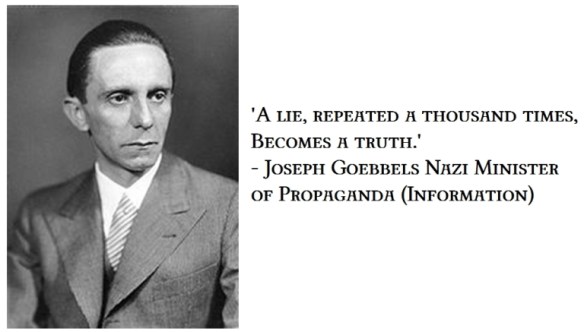
Propaganda is a parasite. It can’t live without a host. ‘Christian Nationalism’ sucks the blood out of sacred texts. Few biblical texts are as beloved as the calling of Isaiah. In the original Hebrew text, Isaiah speaks in the present tense: “In the year that king Uzziah died, I see the Lord, high and lifted up, and his train is filling the temple.” He sees the seraphs flying above the throne, singing “Holy, holy holy, [is] Jehovah of hosts, the fullness of all the earth [is] his glory.”

A Homeland Security promotional recently featured an ICE recruit attributing his sense of call to become an ICE agent to Isaiah in the temple, “Hear am I, Send me.” The Homeland Security promotional [since taken down from X] turns Isaiah’s call into a parasite that sucks the blood of compassion from its host. “We will cut you down,” the voice-over of a helicopter sighting two migrants moving through the night toward the U.S. southern border, displaces the “Holly, holy, holy.” The whole earth that is full of God’s glory is shrunk to the parcel of earth.

An Autobiographical Reflection

It was in college that the calling of Isaiah took hold of me. I don’t remember who put Frederick Buechner’s The Hungering Dark in my hands, but I’ve never forgotten the impact of Buechner’s reflection on the call of Isaiah (Isaiah 6:1-8). I was not in the Temple in Jerusalem; my dormitory room was not filling with smoke; I knew nothing of seraphim, let alone seen them flying overhead or heard them calling to each other their song of praise for God’s holiness. No seraph had touched my lips with a hot coal from the altar. Even so, I knew this story the way a child ‘knows’ a story before the codes of reason ridicule its sense of wonder. Like Isaiah in the year that King Uzziah died, the foundations of what I once thought to be solid were trembling. The world was a mess. So was I. I was a man of ‘unclean lips’ living among ‘a people’ of unclean lips.

The summer before reading The Hungering Dark, my foundations had been shaken by the daily trips on the Red Arrow bus and Philadelphia subway that took me back and forth between where I lived and the squalor of Opal Street in north Philadelphia. Two landmark institutions gave stability to north Philadelphia: the Pennsylvania State Penitentiary and Corinthian Avenue Chapel. The eight homeless men with whom I had spent the afternoons that summer had been guests of the penitentiary before they were released to the streets. Corinthian Avenue Chapel, the empty shell of a once thriving Presbyterian church, vacated by white flight, was three blocks north of the prison.

It was a game of dodgeball with the kids who lived in the tenements on Uber Street that introduced me to the men of Opal Street and set the course for the rest of the summer. There was no traffic on Opal Street. My focus shifted from working with kids to an altogether unexpected summer with “the Brothers of Opal Street.”

An errant throw sent the dodgeball through the circle of ‘winos’ (their designation, not mine) who gathered every afternoon, seated on wooden orange crates, in the middle of Opal Street . After apologizing for interfering, I continued walking to the far end of the block. Like the condemned tenements that lined the east side of Opal Street, the far end of the street was blocked by a boarded-up fence. The chalk outline of a body was still fresh on the pavement

When I returned with the ball, the men asked what I was doing there. When I spoke of games for the kids, one of them drew laughter when he asked, “Do you have any games for us?” “I do,” I said. “Any of you ever play quoits?“ “Quoits?” Again there was an uproar of laughter. “Well, how about horseshoes?” Corky had played horseshoes in the Army. The next day I set up the Quoit stakes on the street. Every afternoon, we played Quoits until the men could no longer stand.

On my last day with them, the men wanted to have “a little talk.” I had expected the sharing of good-byes. What happened was something else. In retrospect it was life-changing, A one-of-its-kind Isaiah in-the-Temple moment. No seraphim flew above us, singing “Holy, holy, holy.” But there was smoke, a red-hot coal striking my lips, and a realization that I was a man of unclean lips among ‘a people of unclean lips’.

“Why did you come here?” they asked. “Don’t come back here. ‘Your people’ own this place. Look around. You don’t see any white faces. Your people never show up around here, but they own this place. It’s too late to help us. But the kids? If you want to make a difference here, go back to ‘your people’ and change things there.”

I had come to Opal Street as a disciple of Jesus, wanting to be of service among the “less fortunate,” like the good Samaritan who crossed the road to show compassion to the man who’d been left half-dead in the ditch. It had seemed that simple at first. I had assumed the western Main-line suburbs and Opal Street were worlds apart. One was wealthy, the other was poor. One was white, the other was black.

Now, after a long, hot summer, the ‘winos’ and ‘junkies’ of Opal Street had shattered the myth of separate worlds. Power and powerlessness, parasites and hosts live in the same world. I returned to college, confused, at sea, questioning everything I had been taught, and threw myself into contemporary philosophy and political science in search of answers to questions that have lasted a lifetime.

Years later, Kai Erikson’s Wayward Puritans provided a sociological framework that deepened my understanding of why and how we human beings ‘other’ each other. Cultures need deviants, outsiders, stereotypes who threaten the majority’s view of itself. Witches became the scapegoats that served to define what the majority was not. The Massachusetts Bay Colony was Christian and moral; witches were neither. The witches of Salem, the banishment of Mr.s Anne Hutchinson and the execution of Mary Dyer, served to save the Bay Colony’s religious–racial consensus from fraying further.


A BURNING COAL melts ICE

The Department of Homeland Security likening the call of Isaiah to a call to join ICE is chilling. It’s bad theology, bad faith, and bad patriotism. But heat always melts ice. Isaiah’s calling is remarkable for its sense of holiness and wonder. The Homeland Security rendering of “Here am I, Send me” is a call to cruelty and unmatched power over the ‘other’. It confuses divine calling with a call to dominate. In the ICE propaganda, there is no sense of the young man feeling lost, no sense of woe, no awareness of unclean lips or of one’s own people as a people with unclean lips, no hot coal from the altar burns away the sin. ICE’s adaptation of Isaiah is a parasite. It replaces the burning coal with an ice cube. Where the seraphim sang of the whole earth filled with God’s glory, border patrol helicopters buzz overhead migrants seeking a better life with the message, “We will cut you down!”

Every person of honest faith and good will is being called in this moment of American history to answer “Here am I, Send me!” Isaiah’s call is not past tense. It is now.

Gordon C. Stewart, Presbyterian Church (USA) pastor and public theologian, author of Be Still! Departure from Collective Madness (2017 Wipf and Stock), writing from Brooklyn Park, Minnesota, August 6, 2025.

Mercy vs. Vengeance: Insights from Psalm 94

Personal Reflections in a time of vengeance

Before Mitchell Dahood’s Anchor Bible Commentary on the Psalms (Psalms II) caught my attention, I had read Psalm 94 as addressing ‘the God of vengeance’. I don’t like vengeance, retaliation, or retribution. I see their results every day in others and in myself. “I am your retribution,” says Donald Trump on the campaign trail. The way of Jesus counters vengeance with mercy, retaliation with forgiveness, retribution with the sweet taste of kindness. 

It was the God of vengeance whose wrath terrified Augustinian monk Martin Luther until Paul’s Epistle to the Romans relieved his distress. “God of vengeance” is mistaken; God was sovereign, yet His heart was for us; not against us. We were no less sinful than Luther had said, but Divine love surpasses our sin. One is ‘justified’ by divine grace through faith.

Father Dahood, Professor of Language and Literature at the Pontifical Institute in Rome, translates the Hebrew word which most translations render as ‘vengeance’ altogether differently. Psalm 94 addresses” the God of vindication.”

I confess that I sometimes hope for vengeance. “’Vengeance is mine; I will repay,’ says the Lord.” So where is it? Is it hiding? If so, why? Is it a projection? Painting God in our image? A Benedictine spiritual guide once replied to my statement, “I don’t believe in Hell” with “Well, we Benedictines say that Hell is real… but there’s probably nobody in it.” The monk was preserving God’s sovereignty as Judge, while maintaining  God’s essence as Love.

Whether it’s God of vengeance or vindication, I feel the psalmist’s cry for God to show up, shine forth, come out of hiding.  Show Yourself. Vindicate Yourself!

Dahood’s translation is also strange for spelling out  the Hebrew Name for God. The Hebrew name was originally four consonants without verbs: YHWH, the inscrutable Name given to Moses out of the burning bush on Mount Horeb. “I Am,” “I Am Who I Am” or “I will be Who I will be.” The Name too holy to speak is above every name – the Breath that breathes in me, in us, in all life. Who , then, am I––little I— to come before You. Who am I to shrink You to a name, you who are the Mystery beyond and within the chaos, neither friend nor foe, “Immortal, Invisible, God only wise, in light inaccessible hid from our eyes.”

I watch the still-to-be sentenced convicted felon entertain his followers, alone on stage at a campaign rally, moving awkwardly, like a teenager who never learned to dance, swaying to the music of YMCA. I see an arena full of adoring fans who have no problem watching the 35-minute visible display of self-absorption.

Learn some sagacity, you dolts,
    fools, when will you understand?
Yahweh knows how vapid are men’s thoughts.

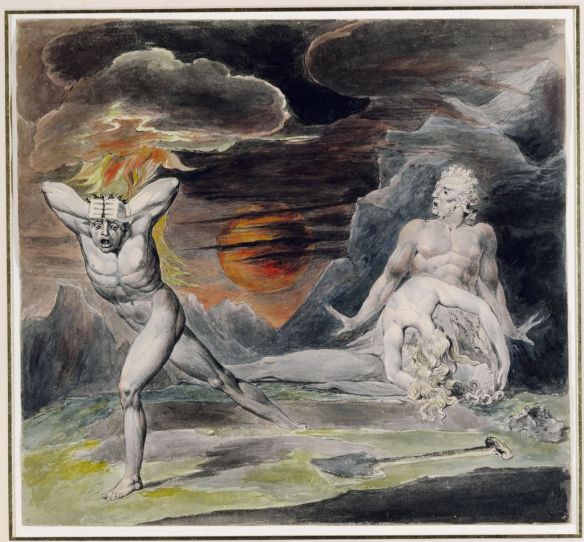
William Blake painting of “Cain fleeing from the wrath of God “as Adam and Eve look on in horror following the fratricide.

“God is hiding, too, Yahiel,” says the Rebbe. “God is crying because we have stopped searching.”

The Epiphany of Treason

Epiphany opens our eyes to the Light of truth and goodness, on the one hand, and the darkness of deceit and malice, on the other: the contrasts of light and darkness, hope and despair, fear and love, goodness and evil.


Gordon C. Stewart, public theologian, social commentator, author of Be Still! Departure from Collective Madness (2017, Wipf and Stock), Brooklyn Park, MN. January 6, 2024.

Understanding Satan: The Personification of Trickery and Con Artistry

Featured

For the Living of this Hour

PSALM 82 NIV

God presides in the great assembly;
he renders judgment among the “gods”:

“How long will you defend the unjust
and show partiality to the wicked?

Defend the weak and the fatherless;
uphold the cause of the poor and the oppressed.
Rescue the weak and the needy;
deliver them from the hand of the wicked.

“The ‘gods’ know nothing, they understand nothing.
They walk about in darkness;
all the foundations of the earth are shaken.

“I said, ‘You are “gods”;
you are all sons of the Most High.’
But you will die like mere mortals;
you will fall like every other ruler.”

Arise, God, judge the world, for all nations belong to you.

Psalm 82 niv

Mark Twain’s Advice to the Bible Salesman

Featured

Rev. Al Sharpton response to the “God Bless the USA Bible”

Preying on Praying

Mark Twain Advice

The Way to Easter

Rev. Gordon C. Stewart, public theologian, host of Views from the Edge, author of "Be Still! Departure from Collective Madness" (2017 Wipf and Stock Publishers), 49 two to four-page meditations on faith and public life, Brooklyn Park, MN, April 4, 2024.

The New Nationalist Bible and “Happy Holy Week”

Donald J. Trump,

“Then said Jesus, ‘Father, forgive them; for they know not what they do.’ And they parted his raiment, and cast lots.”

Gospel of Luke 23:34 NRSV

Rev. Gordon C. Stewart, Presbyterian pastor (H.R.), public theologian, author of Be Still! Departure from Collective Madness (2017 Wipf and Stock Publishers), Brooklyn Park, MN, March 27, 2024, Wednesday of Holy Week.

The gods Made Trump

Featured

Personal Reflection: ‘God’ and ‘the gods’

Mr. Magoo

Impostors of God

A cursory reading of the biblical creation and Good Shepherd stories is a shallow draught. A deeper drink guides the reader into what Karl Barth called “the strange new world of the Bible,” in which we see more clearly. Though monotheists, atheists, and agnostics are of diverse opinions about the one God, they agree that there is not more than one, i.e., the gods do not exist. Those who claim the Bible as their source of truth and life should know better.

Serious study of the Bible leads a reader to notice something missing in “God Made Trump.” The gods of the First Commandment have been deleted – “I am the LORD your God. You shall have no other gods before Me. No longer are their other gods before God. Cut in half, the First Commandment is castrated, but, in reality, only the gods remain.

The Incarnation of the gods

On June 14th, 1946, the gods look looked up and said, “Let us make a creature in our images who will incarnate all of us,” and, so they did. For six days the gods who aspired to be God laid aside their competitive urges to work together as a consortium. They would be godlier than “the God above god” (Paul Tillich), Maker of heaven and earth, whose fatal flaw was to grant the gods freedom to do their mischief.

So, the gods of Pride, Greed, Wrath, Envy, Lust, Gluttony, and Sloth laid aside their several powers for the sake of greater effectiveness. They put their heads together to craft an Immaculate Conception suited to their purposes.

Their creation would be the Incarnation of themselves and would embody all that the less-blessed creatures wanted for themselves: freedom from anxiety, absolute certainty, security, safety, and wealth. So, the gods found a virgin in Queens, and Mary Anne gave birth to her fourth-born child and named him Donald. The things the lesser creatures envied and desired for themselves – his unshakeable self-confidence, freedom to have any woman he wanted, his mastery of the arts of entertainment, prevarication, hypocrisy and greed, exemption from legal restraint and pangs of conscience, fearlessness in the valley of the shadow of death and prosecution, and palaces of silver and gold – would be theirs, just like him.

Assurance in the Storm: a Sermon

Video

An Old Parable too Fresh for Comfort

Featured

Confused and confusing

My head is swirling. I can’t keep up. My relationship with the news is like my 17 year-old son’s description of an older married couple he’d just met: “She’s confused, and he’s confusing.” The world is confusing, I’m confused, and it’s about to get worse. Macular degeneration has not yet affected my reading, but, according to my ophthalmologist, it likely won’t be long before I’ll need new glasses.

To see more clearly

For just as eyes, when dimmed with age or weakness or by some other defect, unless aided by spectacles, discern nothing distinctly; so, such is our feebleness, unless Scripture guides us in seeking God, we are immediately confused. — 16th Century CE French reformer Jean Calvin.

The parable of the sheep, the shepherd, thieves and bandits provides a way of looking at what is happening now, as well as then. Jesus’ parables exceed the boundaries of time and place. 

Very truly, I tell you, anyone who does not enter the sheepfold by the gate but climbs in by another way is a thief and a bandit (John 10:1).

Very truly, I tell you…

The introduction to the parable, “Very truly, I tell you,” commands my attention. Truth has fallen out of favor. Falsehood is in vogue. To tell the truth is suspect. If  honesty prevailed in 2023, many leaders would begin, “Very falsely, I tell you,” before they set off to undermine truth with self-serving partisan speeches, rallies, alternative facts, and agendas.

The Shepherd, thieves, and insurrectionists

The circumstances in which these words are addressed are much like our own. Parables are like that. They exceed the boundaries of time and place. The sheep (people) are threatened by religious leaders (thieves) who have twisted their faith traditions, on the one hand, and bandits (armed nationalist insurrectionists), on the other. Both thieves and bandits are climbing over the stone wall into the sheepfold. The words κλεπτης (thief) and ληστης (robber, brigand, bandit) call for deeper understanding. English translations — “thief” and “robbers” — appear to be a needless repetition, but they are not the same. The κλεπτης  is a thief; the ληστης is an insurrectionist.

The Thief

The thief is a burglar, a bad shepherd. Fourth Ezra, a non-canonical work of the second century CE, catches the sense of it. “Do not desert us [the sheep] as a shepherd does [who leaves] his flock in the power of harmful wolves.” The thief in Jesus parable robs the people’s sacred tradition in collusion with the occupying power, the wolf, the Roman empire. When Jesus  drives the moneychangers from the Temple, his fury is with the deeper theft— the robbery of the people’s sacred tradition. “Get them out of here! Stop turning my Father’s house into a house of trade!” (John 2:16)

The bandit

The bandit is different from the thief. The ληστης is not a κλεπτης ! The thief (κλεπτης) is malleable. He adapts, as circumstances require. That bandit (ληστης)  does not. The last thing a kleptomaniac wants is a ruckus! That bandit (ληστης) makes a ruckus. The ληστης is armed and dangerous, ready to do whatever it may take to get his country back.

The one who enters by the gate is the shepherd of the sheep. The sheep hear his voice. He calls his own sheep by name and leads them out. When he has brought out all his own, he goes ahead of them, and the sheep follow him because they know his voice.

Reckless assumptions

A shepherd’s voice is calm. Its assuring tone and cadence allay anxiety, fear, and panic. The sheep expect a thief or bandit to climb over the wall at night or in broad daylight. They will see it with their eyes and hear it with their own ears. 

They will not follow a stranger, but they will run from him because they do not know the voice of strangers.

But what if the stranger impersonates the shepherd’s voice? What if the sheep do not hear the difference between the shepherd’s voice and the imitative voice? What if the shepherd has been away? What if anxiety dulls the flock’s hearing and clouds its vision, such that the desire for security weakens its defenses against impostors? What if they mistake the thief (κλεπτης) for the good shepherd who enters, and leads them out, through the gate?

The thief comes only to steal, slaughter, and destroy. I came that they may have life and have it abundantly. (Jn. 10:10, NRSVA)

Penultimate thoughts

Although, with age, my eyesight is dimming, my knowledge antiquated, and my soul heavy with weakness and defect, an old pair of spectacles helps me see more clearly beneath and beyond the dazzling displays of wealth and power. I’m stunned that we can be so foolish, but I’m not shocked. The parable of the Good Shepherd zooms in on reality. It leaves me asking who I will follow before all goes dark.

Most disturbing to this old preacher are clergy colleagues who, laying aside their spectacles, on Palm Sundays, lead anxious, fearful flocks in the parade, waving palm branches for Barabbas (Bar [Son] of Abba [Father]), the alternative savior thief and insurrectionist who swears he’s been robbed.

No one can serve two masters. Either you will hate the one and love the other, or you will be loyal to the one and have contempt for the other. You cannot serve God and wealth. (Matthew 6:24, CEB)
Gordon C. Stewart, Be Still! Departure from Collective Madness (2017, Wipf and Stock), 49 short essays on faith and the news; Brooklyn Park, MN, May 2, 2023.