Their Blood Runs in Mine

Our friend Dennis Aubrey posted “The Destruction of History” today on Via Lucis, lamenting the latest in the sordid history of religion destroying history and art.

Dennis Aubrey and P.J. McKey love beauty, history, and the religious architecture of Gothic and Romanesque churches they photograph in Europe. Sometimes, like today, they express a profound despair over the destruction done in the name of religion.

“Now we have word that ISIS has defaced and destroyed artifacts in Mosul, including Assyrian statues of winged bulls from the Mesopotamian cities of Ninevah and Nimrud. Video released by the newest barbarians to assault the cultural history of humanity shows a man using a power drill to deface the works.

“As so often throughout history, the excuse was religion. ‘The Prophet ordered us to get rid of statues and relics, and his companions did the same when they conquered countries after him.’  How many times in our work at Via Lucis have we read variations of these words from Catholics, Huguenots, Calvinists, revolutionaries, counter-revolutionaries, and military leaders?”

Years ago during a sabbatical in St. Andrews, Scotland, the destruction wrought there by my Scottish reformation forebear John Knox and his followers chilled my soul. The people who bred and raised me – Presbyterians of Scottish descent and religious sentiment – did this. They took the commandment to have no other gods as license to destroy, maim, and burn church art and heretics. Their blood runs in mine. Their DNA is mine. And, if confession has any meaning or merit whatsoever, the children of such crimes must say we’re sorry. Really sorry. Repentant. No more destruction. No more following the orders of bully prophets, no matter whose name they claim to honor.

Thank you, Dennis, for your post. On behalf of my ancestors and in the spirit of spirituality of beauty, love, and peace on the other side of destruction, thank you for your artist’s eyes. Thank you for your courage. Thank you for the hope in something better in a barbaric time.

– Rev. Gordon C. Stewart, Presbyterian minister Honorably Retired, Chaska, MN, March 4, 2015.

An Axe for the Frozen Sea Inside Us

Writer Franz Kafka discusses books worth reading.

I think we ought to read only the kind of books that wound and stab us. If the book we’re reading doesn’t wake us up with a blow on the head, what are we reading it for? So that it will make us happy, as you write? Good Lord, we would be happy precisely if we had no books, and the kind of books that make us happy are the kind we could write ourselves if we had to. But we need the books that affect us like a disaster, that grieve us deeply, like the death of someone we loved more than ourselves, like being banished into forests far from everyone, like a suicide. A book must be the axe for the frozen sea inside us. That is my belief.

Kafka’s The Metamorphosis, The Castle, and posthumously published The Trial and Parables and Paradoxes wound and stab us. They “wake us up with a blow on the head.”  They “open the frozen sea inside us”.

– Gordon C. Stewart, Feb. 28, 2015, in tribute to Franz Kafka.


How do you know?

How do you know you’re a writer? Ernest Hemingway, William Faulkner, Tennessee Williams, and Virginia Wolff might have “known” because other writers, publishers, and Broadway and Hollywood producers heaped praise on their writings. But the operative word is might. Existential knowing is a different sort of knowing.

Like great athletes, composers, and musicians, great writers are rarely satisfied with their work. They are always reaching beyond themselves. Often they operate from the depths of depression, despair, obsessed with death, the dark depths of the human psyche and the world’s instinct toward self-destruction. Some of the greatest – Hemingway, Wolff, Sylvia Plath, and Edgar Allan Poe – do themselves in.

How do you know you’re a writer? Some would say you “know” it existentially by the ebb and flow between times of creativity and nothingness. When I feel down and the well runs dry as a bone, I know existentially…I might be a writer.

– Gordon C. Stewart, Chaska, MN Feb. 28, 2015, inspired by tour of Ernest Hemingway’s home in Key West, Florida.

Église Abbatiale Saint-Jouin-de-Marnes (Dennis Aubrey)

Via Lucis Photography of Religious Architecture is a Views from the Edge favorite because of its ability to synthesize art, history, theology, and social commentary centering on the deeper things of the human spirit and the awe of Gothic and Romanesque architecture. In the midst of this post, Dennis Aubrey draws attention to the lion which appears to be spewing foliage. I proposed to Dennis that perhaps the lion is “eating straw like the ox” in Isaiah 11 and 65, Isaiah’s vision of the peaceable kingdom, an interpretation that seems to go well with the church’s sculptural rendering Jesus’ Parable of the Last Judgment in Matthew 25.

Église Abbatiale Saint-Jouin-de-Marnes’s Last Judgment scene suggests an artistic interpretation that eliminates the divide between sheep (saved) and goats (damned), a pictorial witness to the final judgment as universal forgiveness and salvation. To enjoy the original, complete with photographs, scroll down and click on “View the Original”.

Dennis Aubrey's avatar

The church of Saint Jouin de Marnes is known as the Vézelay Poitevin, a tribute to its importance and beauty. It was named after a 4th century hermit named Jovinus from Mouterre-Silly near Loudun. Desiring a retired, contemplative life, he settled on a site of a Roman camp near the road from Poitiers to Angers, ten miles southwest of Mouterre-Silly. The site was called Ension and was in the swamps of the river Dives which flows two miles to the east. In 342 he founded an oratory church which attracted a modest religious community. By the time he died in 370, Jovinus had achieved a great reputation for sanctity and miracles. Over the years, his small community grew in importance, but eventually there was another decline.

In 843, however, the monks of Saint-Martin-de-Vertou in Brittany were forced to abandon their monastery by depredations of the Vikings. With the help…

View original post 968 more words

Burdened

Image

Scroll down to “View Original” and click the link for Joshi Daniel’s photo of the man carrying a heavy burden.  If inspired, share a comment on what you see and the human condition.

joshi daniel's avatarJoshi Daniel Photography

Old man in Trivandrum carrying a big load on his head Old man carrying a big load | Trivandrum, Kerala, India

View original post

The Concert Goers – I Fib You Not!

Below is a “Fib” – shorthand for a Fibonacci – explained HERE on The Poetry Foundation website.

The number of syllables in each line of the “The Concert Goers” should be 1, 1, 2, 3, 5, 8, 13, 21, and 34. Unfortunately this blog post does not permit the 34 syllable line to be read as a single line. Let your eyes do the trick of combining the last two lines into one.

The Concert Goers

O
the
joyful
harmonies
whose orchestras and
choristers draw longing, lonely
specks of stardust to the hall to join as one to hear
the yet-to-be-voiced dots and lines and signs played and sung by drums, piano,
clarinets, piccolos, triangle, timpani, trumpets, sopranos, altos, tenors, and basses to the magic of the Maestro’s baton!

 – Gordon C. Stewart, Feb. 4, 2015

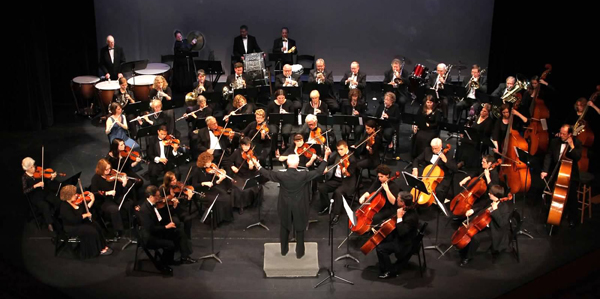
Lake Murray Symphony Orchestra

Lake Murray Symphony Orchestra

Kurumba tribal woman of Attappadi

The weathered face and eyes of the Kurumba woman living in the interiors of the forest in Kerala, India, seems to say, “I see you. Do you see me? What do you see of me and you – I, living deep in the interior forest, and you, in whatever forest you’re living?” Thank you, Joshi Daniel, for sharing what your eyes see.

joshi daniel's avatarJoshi Daniel Photography

Black and white portrait of an old Kurumba tribe woman of Attappadi in Palakkad district of Kerala

Read more: Kurumba tribe

Nominate your favorite photoblogs for the Fifteenth Annual Weblog Awards: The 2015 Bloggies http://2015.bloggi.es/#photography

View original post

Verse – Sirens

The women of the choir
were flirting as they sang,
eyes rolling, tilting heads,
the lilting voices rang
the changes in their moods
enticing males who heard
the notes and interludes,
but knew it was absurd:
to trust a single word….

– Steve Shoemaker, Urbana, IL, Dec. 22, 2014

Editor’s Note: Hmmm. I’ve often wondered why Steve sings in three choirs. Maybe Steve and the rest of the basses, tenors, and baritones come to rehearsals as Tritons, the male equivalents of  Sirens?

Triton Fountain, Rome

Triton Fountain, Rome

Poem #5 – Dale Hartwig (1940-2012)

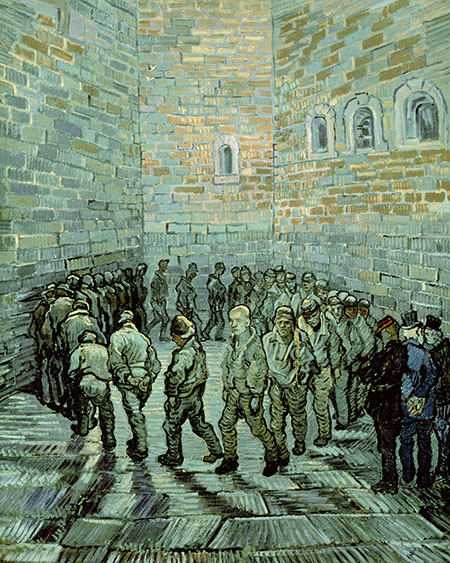
Prisoners Exercising, Vincent Van Gogh, 1890  with Van Gogh looking out and beyond.

Prisoners Exercising, Vincent Van Gogh, 1890 with Van Gogh looking out and beyond.

Dale Hartwig stood out from the crowd. He wrote for himself. His was a rich inner world, a necessity for survival as Parkinson’s shrank his world to the size of his room at the care center. His writings, shared with a group of six close friends, deserve a larger audience.

Dale’s verses and poetry often echo the Hebrew psalmists. They are visceral, sometimes crying out  like Vincent Van Gogh exercising in his asylum at Saint-Remy, and at other times delighting at the sight of a fluttering leaf or falling snowflake outside his care center window. None of Dale’s pieces have titles.

Like prisoners, they only have numbers – the order in which he wrote them, as best we can tell.

Poem #5

Behind and before, Thou goest, O Lord.
Like the wind I cannot see.
But why so silent in ways of my need?
To let you but walk to trust in me.
O my steps are oft frozen from fear,
And my thoughts locked to the darkness around.
O God, only You can move me beyond
The prison that seems to abound.
Come, Lord, and move me, just one small step
Toward the One who would give me so much.
I am who I am, so little sometimes
But, with You, so much, so much.

The last time Dale joined the annual Gathering of classmates in Chicago, he surprised us. He wasn’t supposed to leave “home” – but he did. He somehow managed to get himself to the train station in Grand Rapids, Michigan, board a train for Chicago, and make his way from Union Station to Hyde Park by public transportation carrying a suitcase on the stiffening legs he still exercised daily.

When it came his time to share what had been happening in his life, he handed me a sheaf of papers and pointed to the number 5 on one of the pages he had typed. I read it aloud for him. Every face was wet. “I am who I am, so little sometimes But, with You, so much, so much.”


Father and Son – Bob and Alan

Bob Smith and his first-born child, my cousin Alan, never had what you and I would call a normal conversation. But I suspect they “talked”more deeply in their own father-son ways.

Alan’s tongue and body were held captive from birth by Cerebral Palsy. He never spoke a word that I could understand.

Each morning Alan’s mother, my Aunt Gertrude, and his father, my Uncle Bob, lifted Alan from his bed, cared for his morning needs with tender respectfulness, carried him downstairs to the kitchen for breakfast. Sitting on his father’s lap, the spoon and fork came to his mouth from the hand of his father. Uncle Bob would then carry Alan to the parlor, the back room on the first floor of the house on Porter Street, where Alan would lie until lunch. Uncle Bob came home from the Oxford County Court House for lunch every day  to be with Alan, Gertrude, and Alan’s young brother and sister, my cousins Dennis and Gwen. He would go to the den, lug Alan to the kitchen, feed him lunch…. Repeat, repeat, repeat at dinner. Carry Alan upstairs, prepare him for bed, and, as I imagine it, say a prayer that Alan could hear and understand but could not speak. He did that for 14 years.

My time with Uncle Bob and Alan dates back to my earliest years. Every summer I stayed at my uncle and aunt’s house for a week while the rest of my family stayed with my grandparents. My relationship with my cousin Dennis, only six months older than I, was special enough to separate me out for special time at the house on Porter Street.

Looking back on it now awakens me to the sense of heaviness that came over me watching Alan, seeing the joy in his eyes and the contorted smile that broke out on his face, and listening to the moans of greeting and sheer delight that came from his palsied vocal chords whenever he and I would see each other after the long year’s absences between my family’s vacations.

There was a bond deeper than words. The bond of eyes and smiles. The bond of kinship and shared joy, as well as sorrow. I always wondered what was going on in Alan’s head. Aunt Gertrude, an elementary school teacher, claimed he was very intelligent, but there was no way to measure it. Had he been born 40 years later Alan might have been a Stephen Hawking “talking” by other means, but he wasn’t. He was born in 1939. And if there was a silent bond of awkwardly expressed love between two cousins whose visits were annual, how much deeper and familiar was that bond between the father and his son?

I’ve often wondered what it was like being Alan. I’ve scolded myself in times of self-pity, and sought the deep courage and joy that emanated from Alan.

I’ve also marveled at Uncle Bob, a wrrior in the trenches, fighting despair over Alan’s plight, what might have been and would never be for him, rising to the daily-ness of it all, some days resenting it, some days wishing he could take his family of vacations like other families, some days finding comfort and courage playing a great sacred music piece on the organ of First Congregational Church of South Paris where he served as Organist and Choir Master for 40 years. Perhaps the familiar hymn tune “Serenity” set to John Greenleaf Whittier’s poem “Immortal Love, Forever Full”, encouraging the love he bore for his speechless son:

Im-mort-al Love, for-ev-er full,
For-ev-er flow-ing free,
For-ev-er shared, for-ev-er whole,
A nev-er ebb-ing sea!

The heal-ing of [Christ’s] seamless dress
Is by our beds in pain;
We touch Him in life’s throng and press,
And we are whole a-gain.

At the end of really good days when joy was high with thanksgiving for the father-son bond with Alan, I imagine him walking down Main Street to the darkened church, taking his seat on the organ bench with the lights out except for the organ light, his feet pumping the pedals, his fingers flying over the keyboards and reaching for the stops to play the Widor Toccata he played every Easter, a lush oasis “in life’s throng and press.”