All the World – tout le monde, kl alealam

Christian Theological Seminary‘s “Statement on Attacks on Beirut and Paris” (11.16.15) is one for the ages.

“Friends,

“All the world – tout le monde – grieves and stands with France in the midst of these harrowing days. All the world – kl alealam – grieves and stands with Lebanon. As people of faith, our hearts can only break when God’s children turn against each other in the name of God. And the most elemental, effective way to counter such “turning against” is to reverse the gesture, turning toward one other in solidarity, compassion, and hope.

“On Friday night, I attended the student-organized vigil against racism, a gathering powerfully proclaiming that Black Lives Matter. CTS student body president Whittney Murphy spoke eloquently that we are like the candles we held that night: sometimes flickering in the wind, or even going out, but then rekindled by the lights of others. The shadows may fall and the winds threaten, but together we can walk in the promise that God is with us, and that God is a light the world’s shadows cannot and will not overcome.

“As we stood together in the vigil that night along Michigan Road, the attacks in Lebanon were only a day old, and the news was just beginning to come in about the attacks in Paris. On one level, these various events – the vigil and the attacks – seem separate and distinct. But on a deeper level, they are profoundly connected. The same dehumanizing act of dividing the world into “us” on the one hand and “our enemies” on the other is the root of both racism and religious intolerance. The peace and equality for which the vigil called here at home is the same peace and equality we need in France, Lebanon, and beyond. And what’s more (and more troubling), while France has received a public outpouring of support and solidarity from around the world, Lebanon has not. For many, this has understandably raised the question: When it comes to the world’s solidarity and concern, don’t Lebanese lives matter as much as French ones? If our hearts (or Facebook pages) now bear the French flag’s blue, white, and red, shouldn’t they also bear Lebanon’s red, white, and green?

“In the New Testament Gospels, Jesus’ signature move is to stand with outsiders, with the forgotten or marginalized, and to reach across religious and ethnic lines of hostility. Following Jesus as best we can, we can only heed the call to do the same. Jesus is in Lebanon. Jesus is standing along Michigan Road. Jesus is in France, and in so many other places around the world, mending the brokenhearted, calling for justice, calling for love. Wherever the shadows fall, there Jesus goes, the flickering, quickening light of the world.

“And so we give thanks for student leaders, their voices clear, their faces illuminated by candles of hope. We give thanks for all of those committed to helping to turn these horrifying attacks into renewed resolve to work toward reconciliation. For as we approach the coming Season of Advent, those four weeks of lament and prayer that lead to a once-forgotten backwater not far from Lebanon, we know our lives depend on the love that binds us together. So much depends on that love. All the world – tout le monde, kl alealam – depends on it.

“God’s shalom,

Matthew Myer Boulton

Matthew Myer Boulton

Matthew Myer Boulton
President and Professor of Theology
Christian Theological Seminary
1000 W. 42nd Street, Indianapolis, IN 46208″


Syrian Refugees Welcome Here

Suggested letter to come from the Board of the small Presbyterian Church of Philo, Illinois:

Dear Syrian refugee family,

Yes, we know you are Muslims, fleeing for your lives from a violent cult that claims they have all the truth & can harm anyone they want.

We are a small Presbyterian Christian Church in a small town, Philo, in Illinois.

Yes, our State’s Governor in Springfield says no Syrian refugees can come to our State. Fortunately, our Country separates Church from State, so we will welcome you here. Tell us where you are & we will send a car…

Members, Philo, Illinois, Presbyterian Church

  • Steve Shoemaker, Urbana, IL, Nov. 16, 2015
Philo Presbyterian Church, Philo, Illinois

Philo Presbyterian Church, Philo, Illinois


Being Human – nothing more, nothing less

The ISIL fundamentalist extremists who terrorized Paris, San Bernardino, Beirut, and elsewhere in the name of God believe in an eternal reward for sacrificing themselves for a holy cause. Though it may seem strange to many of us in the West, they share two beliefs widely held by others who are not terrorists:

  1. God (Allah, in Arabic) is a being — the Supreme Being, but ‘a being’ nonetheless.
  2. Death is not the end of mortal life; we are destined for immortality – Heaven or Hell, eternal states of bliss or punishment.

It’s not just the jihadists who deny our mortality, our perishable nature within the order of Nature.

In Man Before Chaos: Philosophy Is Born in a Cry, philosopher of religion Willem Zuurdeeg wrote:

“Threatened by nonbeing, by chaos, and meaninglessness, man looks for a foothold in the Imperishable.”

The “soldiers of the caliphate” are young. Paradoxically, as hideous, grotesque, and deranged as their thinking is, their massacres are performed in the name of an ideal. They are idealists claiming “a foothold in the Imperishable”.

Seeking to rid the world of evil, they succumb to evil. In the name of heaven and the Imperishable, they create hell on earth.

But what if God is not a being? What if, as Paul Tillich argued, God does not “exist” as a thing or person exists, but instead is Being-Itself or the Ground of Being or the God above god?

What if we are mortal? What if death is the end, not a doorway to heavenly reward or eternal punishment? What if no St. Peter stands at the pearly gates to separate sheep and goats? What if no vestal virgins are waiting? What if life and death are what they seem?

John Lennon’s “Imagine” strikes a chord in the aftermath of the attacks in Paris, Beirut, and Mali. Imagine there’s no religion. But imagining won’t erase the problem of religion or the anxiety endemic to the human condition. We are suckers for certainty desiring the end of complexity and ambiguity.

“Finitude,” wrote Paul Tillich, “means having no definite place; it means having to lose every place finally, and with it, to lose being itself.”  [Systematic Theology, Vol. I., p. 195, University of Chicago Press]

The appeal of fundamentalist certainty, whatever its form, is the promise of a secure foothold, place in immortality – a purpose bigger than life itself, the escape from ambiguity.

When faith is ill-conceived as acting to end the ambiguities represented by the enemies of God, instead of as coping with life’s inherent ambiguities, we create what we seeks to escape. We create a foothold in what will not hold.

What if to be human is not to escape mortality, but to embrace it thankfully and to live courageously within the boundaries of time, of mortal flesh filled with the Eternal in the midst of time?

“Being holy . . . does not mean being perfect but being whole; it does not mean being exceptionally religious or being religious at all; it means being liberated from religiosity and religious pietism of any sort; it does not mean being morally better, it means being exemplary; it does not mean being godly, but rather being truly human.” ― William Stringfellow, A Keeper of the Word: Selected Writings.


  • Gordon C. Stewart, Chaska, MN, January 9, 2016

Paris, ISIL, a poem, and a hymn

ISIL has claimed responsibility for yesterday’s terrorist attacks in Paris.

We publish its statement here, followed by Steve’s  verse “Doing only what we’re told” (published by Views from the Edge moments ago) and a video of the hymn “O God of Every Nation”.  In times like this, it’s easy to forget that ISIL’s “soldiers of the Caliphate” do not represent the Islamic world any more than the Florida preacher who hanged Muhammed in effigy and burned the Quran represents Christianity.

ISIL Statement of Responsibility

In the Name of Allah, the Most Merciful, the Most Beneficent

Allah (ta’ala) said, {They thought that their fortresses would protect them from Allah but Allah came upon them from where they had not expected, and He cast terror into their hearts so they destroyed their houses by their own hands and the hands of the believers. So take warning, O people of vision} [Al-Hashr:2].

In a blessed battle whose causes of success were enabled by Allah, a group of believers from the soldiers of the Caliphate (may Allah strengthen and support it) set out targeting the capital of prostitution and vice, the lead carrier of the cross in Europe-Paris. This group of believers were youth who divorced the worldly life and advanced towards their enemy hoping to be killed for Allah’s sake, doing so in support of His religion, His Prophet (blessing and peace be upon him), and His allies. They did so in spite of His enemies. Thus, they were truthful with Allah – we consider them so – and Allah granted victory upon their hands and cast terror into the hearts of the crusaders in their very own homeland.

And so eight brothers equipped with explosive belts and assault rifles attacked precisely chosen targets in the center of the capital of France. These targets included the Stade de France stadium during a soccer match – between the teams of Germany and France, both of which are crusader nations – attended by the imbecile of France (Francois Hollande). The targets included the Bataclan theatre for exhibitions, where hundreds of pagans gathered for a concert of prostitution and vice. There were also simultaneous attacks on other targets in the tenth, eleventh, and eighteenth districts, and elsewhere. Paris was thereby shaken beneath the crusaders’ feet, who were constricted by its streets. The result of the attacks was the deaths of no less than two hundred crusaders and the wounding of even more. All praise, grace, and favor belong to Allah.

Allah blessed our brothers and granted them what they desired. They detonated their explosive belts in the masses of the disbelievers after finishing all their ammunition. We ask Allah to accept them amongst the martyrs and to allow us to follow them.

Let France and all nations following its path know that they will continue to be at the top of the target list for the Islamic State and that the scent of death will not leave their nostrils as long as they partake in the crusader campaign, as long as they dare to curse our Prophet (blessings and peace be upon him), and as long as they boast about their war against Islam in France and their strikes against Muslims in the lands of the Caliphate with their jets, which were of no avail to them in the filthy streets and alleys of Paris. Indeed, this is just the beginning. It is also a warning for any who wish to take heed.

Allah is the greatest.

(And to Allah belongs all honor, and to His Messenger, and to the believers, but the hypocrites do not know) [Al-Munafiqun: 8].

Doing only what we’re told

Not all sects are cults, it’s clear,
But each cult is too a sect:
All others are seen with fear,
Only those inside respect.

If we tell ourselves a lie
And repeat it night and day
Soon it is all right to kill
Any that our leaders say
Go against our own god’s will…

Steven Shoemaker
Urbana, Illinois

[Friday, November 13, 2015, Paris]

Verse on Paris Terror

Doing only what we’re told

Not all sects are cults, it’s clear,
But each cult is too a sect:
All others are seen with fear,
Only those inside respect.

If we tell ourselves a lie
And repeat it night and day
Soon it is all right to kill
Any that our leaders say
Go against our own god’s will…

Steven Shoemaker
Urbana, Illinois

[Friday, November 13, 2015, Paris]

Old Joe Hill and Old Doug Hall

Joe Hill (1879-1915)

Joe Hill (1879-1915)

I dreamed I saw Joe Hill last night,
Alive as you or me
Says I, “But Joe, you’re ten years dead,”
“I never died,” says he.

I dreamed I saw Doug Hall last night,
Alive as you or me
Says I, “But Doug, you’re 11 years dead,”
“I never died,” says he.

If Doug Hall had heroes, foremost among the candidates were Joe Hill, the labor organizer and Paul Robeson, whose rendition of Old Joe Hill was his Doug’s favorite. Willie Nesbitt echoed Robeson’s versions of Old Joe Hill and Old Man River at Doug’s Memorial Celebration November 14, 2004.

Those who live and die for economic justice never die. They live on through those who pick up the shovels when they’re gone.

  • Gordon C. Stewart, Chaska, MN, November 13, 2015

Senator Rubio, Welders and Philosophers

“Welders make more money than philosophers,” said Mr. Rubio during last night’s Republican presidential debate. “We need more welders and less philosophers.”

No one on the stage seemed to remember John Adams, one of the Founding Fathers, who observed,

“I must study politics and war [in order] that my sons may study mathematics and philosophy.”

Instead of raising the minimum wage, Mr. Rubio calls for re-tooling America’s educational system to prepare people for jobs so they’ll make more money. Education would become training for a specific job.

His contrast between welders and philosophers is more about liberal arts education than about wages. Classical liberal arts programs teach people how to think. Philosophers are thinkers.

There is an anti-intellectual streak in American culture. When a skilled debater scratches that itch, there is loud applause, as there was last night in Milwaukee.

In the search for simplicity, those who applauded Mr. Rubio’s swipe at philosophers ignored philosopher Bertrand Russell’s observation.

“To teach how to live without certainty and yet without being paralyzed by hesitation is perhaps the chief thing that philosophy, in our age, can do for those who study it.”

The stereotype of the philosopher as aloof and beside the point makes for an easy target and an immediate laugh. But governing is not like welding.  We need need good philosophers and good welders.

“The society which scorns excellence in plumbing as a humble activity and tolerates shoddiness in philosophy because it is an exalted activity will have neither good plumbing nor good philosophy; neither its pipes nor its theories will hold water.” – John W. Gardner

  • Gordon C. Stewart, Chaska, MN, November 11, 2015


Guns and God

No matter what your religion or politics, this is worth a look.  Click “Beyond Any Singing” below to tune in to the video of an evangelical Christian pastor’s reflections on how his mind has changed on gun violence.

Seeing different things and common sense

Not only do we see things differently; we see different things.

Minnpost.com republished Views from the Edge’s “Reframing the Gun Conversation.” The commentary encourged a more thoughtful conversation among rural, urban, and suburban Americans by placing the issue of gun violence within the philosophical context of “Life, Liberty, and the pursuit of Happiness” (American Declaration of Independence).

Fifty-nine response were mostly respectful, sometimes contentious, frequently like ships crossing in the night. The differences seemed grounded in something else much more foundational than the rural, urban, suburb settings that contribute to our perceptions.

MBTI Chart

MBTI Chart

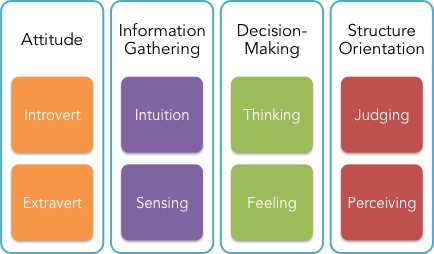
On later reflection, the comments struck me as a poster child for the Myers-Briggs Type Inventory  (MBTI), which identifies 16 different ways individuals put their worlds together.

Mr. A, for example, could not understand Mr. Y’s preoccupation with statistical information. To Mr. A’s way of putting his world together, Mr. Y’s facts and statistics alleging to prove that gun violence in America is decreasing are an attempt to dismiss any serious discussion of gun violence in America.

For Mr. Y’s way of putting the world together, hard data are the baseline for any reasonable discussion. Phrases describing “a tidal wave of mass shootings” and “an endless parade of mass shootings” misrepsent the facts. In his view, Mr. A is clearly biased from the beginning. There can be no discussion if the premise is biased by emotion.

According to the MBTI profiles of different types of cognition, Mr. A and Mr. Y demonstrate contrasting extremes of perception and decision making, very different ways of putting their worlds together. “ST” types (Mr. Y) “know” by collecting information and analyzing it; “NF” types know” by intuiting a situation and approach an issue based on values.  Sometimes never the twain shall meet.

Despite all their differences, the majority of comments and exchanges made one thing clear. The word ‘gun’ is a trigger word. For gun rights advocates, it triggers a defense in fear that “they’re coming to take away our guns” or an outcry in fear that”they’re going to keep and us their guns no matter what.”

Most interesting was the comment by a gun-owner and Second Amendment rights advocate who seemed to bridge the gap in search for “common sense” solutions to gun violence in America.  We’ll call her Ms. Q. She wrote:

I am one who grew up in a rural area. I own guns. It may surprise some, but not others, that it wasn’t uncommon to find student vehicles (pickups, mostly) with guns openly stored in them. That has probably changed…it’s been a while. But I would venture to guess that guns can still be found in the vehicles of students, just not so openly.

My dad was a member of the NRA. One day, I realized (or maybe Dad mentioned it) that there was a junior membership. Well, being a daddy’s girl, I considered it. I enjoyed hunting, I enjoyed spending time with Dad, I respected what Dad thought and did. So, I read some of the NRA literature. Being somewhat precocious, I realized that the NRA wasn’t about hunting or hanging out with Dad. It was about guns. Guns Guns Guns Guns. Even back then (as I said, it’s been a while), it wasn’t about freedom or happiness, the NRA was about guns. I realized that I didn’t want to join the NRA because my gun ownership wasn’t about guns. I didn’t love guns. I loved being an American kid who had the freedom to be happy doing things like hunting with my dad. There were better organizations that more perfectly captured that feeling for me.

As I’ve aged, I am still a defender of Second Amendment rights. But not the NRA way, which seems to be the dominant position among the loudest gun rights advocates. We need to think practically about the problem. Sure, we law abiding gun owners are doing the right thing. Right? I own 3 guns and have never sold those 3 guns. However, only 1 of those guns was new when I got it. The others were purchased…well…without any safeguard at all. Friends of friends type of deal. Yeah, it’s been a while, but I guarantee you that those types of sales haven’t stopped and they are certainly not subject to background checks. How do you suppose people who commit crimes with guns get them? All of those guns were likely sold legally at some point, but eventually ended up in the wrong hands. How do we stop that?

I agree that certain restrictions will have absolutely no effect. But I also submit that many legitimate gun owners are failing to see how they contribute to the problem. What do you do with a gun you no longer want? How about this: in 2010, about 4 million babies were born in the US…but 5.5 million new guns were manufactured in the US and another nearly 3 million were imported. How many guns does each baby need? Seriously, the pace of gun manufacture has outstripped the growth of the country, which means that there are a significant number of people who are buying multiple new guns and either accumulating them (most gun collectors are harmless) or selling some. Once a gun leaves the hands of the original owner, it is harder and harder to make sure that the next owner is not one of those “inner city criminals.” That is, if you’ve ever sold a gun, you’ve contributed to the problem.

Further, I submit that keeping a gun in such a way that results in harm to someone else, particularly children, is a criminal act. Which suggests that even some law abiding gun owners are actually not law abiding. At the very least, every gun owner should be properly trained in gun use and storage. And, if gun owners oppose that measure, then for the sake of their unfortunate children, laws should be allowed to physically restrict who can use the gun. A dead child isn’t a good way to learn that lesson.

Finally, not everyone is a hero. No, not everyone should have a gun on them to “protect themselves.” Half of all people are of average intelligence or less. Combine that with the fact that common sense isn’t so common, and disaster is waiting to happen. Case in point: the woman who decided to fire upon a SHOPLIFTER leaving a home improvements store while they were driving away in a parking lot that had other people in it. She had not been threatened and none of the stolen items were hers. That woman showed all the intelligence and common sense of a dead slug. Fortunately, her Second Amendment right didn’t kill anyone, but not for lack of trying.

Can we agree that we should consider applying real common sense to the problem?

Thank you, all, but special thanks to Ms. Q for the final question.

  • Gordon C. Stewart, Chaska, MN, Nov. 2, 2015

Donald Trump and the Presbyterians

Donald Trump and Ben Carson

Candidate for President Donald Trump’s sideswipe at fellow Republican candidate Ben Carson’s Seventh Day Adventist faith calls for a response from those who are what Mr. Trump is not – a Presbyterian.

Although Mr. Trump attended Sunday School and was confirmed at the First Presbyterian Church of Jamaica in Queens, NY, he is not a member of a Presbyterian Church. His church of choice on Easter and Christmas is Marble Collegiate Church, the historic Reformed Church in America congregation in midtown Manhattan best known for the Rev. Dr. Norman Vincent Peale, author of The Power of Positive Thinking.

“I am Presbyterian Protestant. I go to Marble Collegiate Church,” he told reporters in Greenville, S.C.  Two funny thing about that: 1) Marble Collegiate Church is not a Presbyterian church, and 2) even if it were,  Mr. Trump is not a member there, according to the church itself.

Why does it matter?

Who cares?  UNTIL Mr. Trump presents himself as a Presbyterian in contrast to another candidate’s Seventh Day Adventist faith in a way that is typically very un-presbyterian.

“I’m a Presbyterian. I’m a Presbyterian. I’m a Presbyterian!” he proclaimed with pride, insinuating that he is in the mainstream while Dr. Carson’s Seventh Day Adventism (SDA) is a fringe group outside the mainstream of American religious life. He seemed unaware that 1) Seventh Day Adventists are one of the fastest growing churches both in the U.S. and the world with a worldwide membership of 18.1 million, and 2) unlike the overwhelmingly white Presbyterian Church to which he claims to belong, the SDA is full of color and immigrants.

As to his own faith, Trump’s answer to Frank Luntz’ question of whether he’s ever asked for forgiveness offers further insight:

“I am not sure I have. I just go on and try to do a better job from there. I don’t think so,” he said. “I think if I do something wrong, I think, I just try and make it right. I don’t bring God into that picture. I don’t.”

Trump said that while he hasn’t asked God for forgiveness, he does participate in Holy Communion.

“When I drink my little wine — which is about the only wine I drink — and have my little cracker, I guess that is a form of asking for forgiveness, and I do that as often as possible because I feel cleansed,” he said. “I think in terms of ‘let’s go on and let’s make it right.'”

The Presbyterian-Reformed Tradition

There are a few things about the Presbyterian-Reformed tradition of the Christian faith that Mr. Trump seems not to know or has forgotten:

  1. The Reformed-Presbyterian faith shuns ostentation.
  2. Simplicity is a characteristic of the Christian life.
  3. “The sins forbidden by the First Commandment” include “self-seeking, and all other inordinate and immoderate setting of our mind, will, and affections upon other things;…hardness of heart, pride, presumption, carnal security” (Larger Catechism, Q 1).
  4. Confession of sin – both in private prayer and in the “Confession of Sin” in every Sunday service of worship – is a daily spiritual discipline of Christian life and practice.
  5. Divine grace and the forgiveness are the sources of personal and communal renewal and reconciliation.
  6. Respect for other religions -“Christians find parallels between other religions and their own and must approach all religions with openness and respect” (Confessions of 1967 IIB3) – and humility about one’s own religious claims are called for before God.

Local Presbyterians and Seventh Day Adventists

Momoh Freeman

Momoh Freeman

Every Sunday for seven years Momoh Freeman, a gifted Liberian refugee musician, served as Director of Music at Shepherd of the Hill Presbyterian Church in Chaska; on Saturdays he served in the same capacity at a Seventh Day Adventist Church in Minneapolis. The beliefs and practices of the two congregations are distinctly different in many respects, but we became fast friends.

The SDA Choir, comprised of Liberian-Americans, Liberian refugees, and African Americans, performed in concert at Shepherd of the Hill at our invitation, singing both African hymns and Handel’s Hallelujah Chorus a cappella!

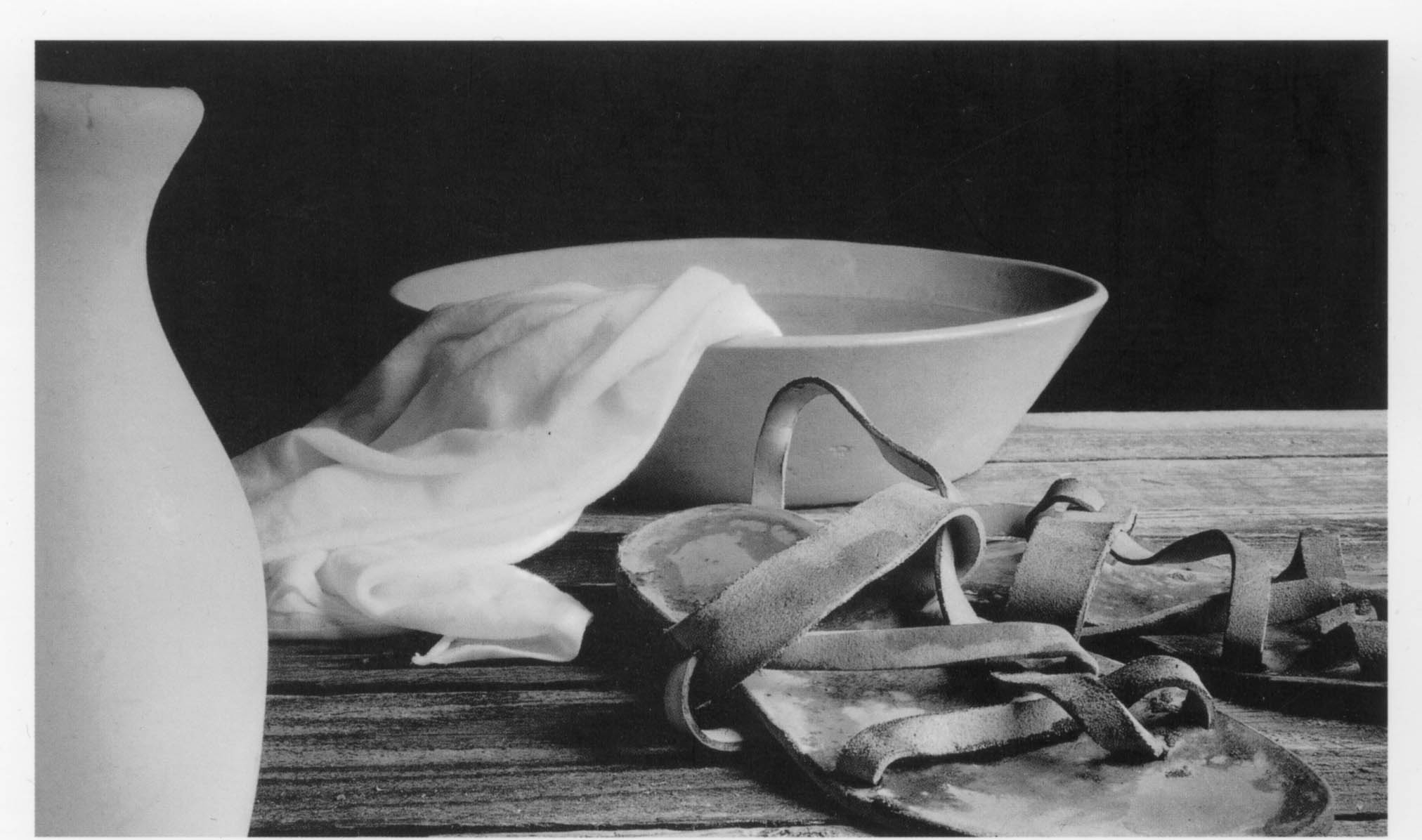
We Presbyterians joined our SDA friends in Minneapolis for Saturday worship, including the foot-washing ritual that preceded the Sacrament of Holy Communion to which we were also welcome. None of us went to the table “drink my little wine…and have my little cracker.”

A remedy of humble faith

Considering the disrespect in the run up to a presidential nomination, a good foot-washing seems in order.

When Jesus washed Peter’s feet, Peter replied, “Lord, not my feet only but also my hands and my head!” (John 13.9)

  • Gordon C. Stewart, Presbyterian Teaching Elder (i.e., Minister of Word and Sacrament) H.R., Chaska, Minnesota, October 28, 2015