
Black History Month: Fountain Hughes

101 year old ex-slave Mr. Fountain Hughes’tape-recorded interview is preserved by the Library of Congress. Hermond Norwood interviewed him. Here’s an excerpt:


Hermond Norwood: Do you remember much about the Civil War?

Fountain Hughes: No, I don’t remember much about it.

Hermond Norwood: You were a little young then I guess, huh.

Fountain Hughes: I, uh, I remember when the Yankees come along and took all the good horses and took all the, throwed all the meat and flour and sugar and stuff out in the river and let it go down the river. And they knowed the people wouldn’t have nothing to live on, but they done that. And that’s the reason why I don’t like to talk about it. Them people, and, and if you was cooking anything to eat in there for yourself, and if they, they was hungry, they would go and eat it all up, and we didn’t get nothing. They’d just come in and drink up all your milk, milk. Just do as they please. Sometimes they be passing by all night long, walking, muddy, raining. Oh, they had a terrible time. Colored people that’s free ought to be awful thankful. And some of them is sorry they are free now. Some of them now would rather be slaves.

Hermond Norwood: Which had you rather be Uncle Fountain?

Fountain Hughes: Me? Which I’d rather be ? [Norwood laughs] You know what I’d rather do? If I thought, had any idea, that I’d ever be a slave again, I’d take a gun and just end it all right away. Because you’re nothing but a dog. You’re not a thing but a dog. Night never comed out, you had nothing to do. Time to cut tobacco, if they want you to cut all night long out in the field, you cut. And if they want you to hang all night long, you hang, hang tobacco. It didn’t matter about your tired, being tired. You’re afraid to say you’re tired. They just, well [voice trails off].You wasn’t no more than a dog to some of them in them days. You wasn’t treated as good as they treat dogs now. But still I didn’t like to talk about it. Because it makes, makes people feel bad you know. Uh, I, I could say a whole lot I don’t like to say. And I won’t say a whole lot more.”

O Let My People Go

For ten or twenty, thirty years or more
the song was sung before the Civil War

by southern slaves in secret. First a call,
and then a sung response that came from all

around, “O let my people go!” And then
another voice, another poet, sang

out still another call, “Tell King Pharaoh!”
And then, “This world’s a wilderness of woe…”

“O let my people go!” Old Lincoln heard
the sad song sung and gave the legal word:

Abolish evil slavery first here,
and finally across the land. For where

no freedom is for some, at risk we all
will be. Each one must listen for the call:

to set each prisoner free.

– Verse “O Let My People Go” by Steve Shoemaker, Urbana, IL, October 23, 2013

Spirituals! (The first one published in 1861, “O Let My People Go,” was transcribed by a YMCA missionary sent to help escaped slaves at Fort Monroe. –Dena J. Epstein, “Sinful Tunes and Spirituals: Black Folk Music to the Civil War,” Univ of Illinois Press, 1977, 2003.)

Editor’s Note: Harriet Tubman was the Moses of the Underground Railroad.

The Slaves Speak to Our Time

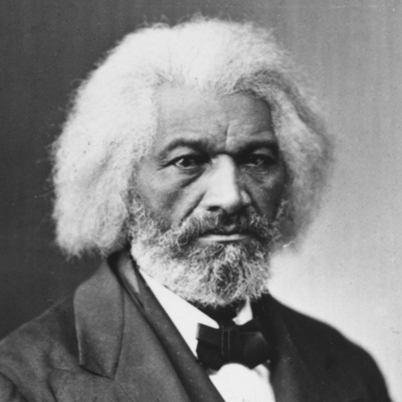
The voice of Frederick Douglass:

Whether we turn to the declarations of the past, or to the professions of the present, the conduct of the nation seems equally hideous and revolting. America is false to the past, false to the present, and solemnly binds herself to be false in the future.

– Rochester, NY, July 4, 1852

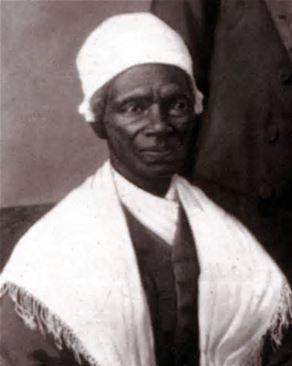
Sojourner Truth

Sojourner Truth

This Tuesday’s Dialogues program will bring the voices of the slaves to the Chapel of Shepherd of the Hill Church in Chaska, MN. The time is 7:00 p.m. Tuesday, October 15.

The evening will begin with Odetta singing “I been ‘buked and I been scorned” and move into the spoken words of 101 year-old ex-slave Fountain Hughes, Sojourner Truth, Frederick Douglass, and Harriet Tubman (“Moses”), and Langston Hughes (“The Freedom Train”) portrayed by local residents Yvette Atkinson and Ray Pleasant in dramatic readings.

Group singing of the music that kept hope alive: There is a balm in Gilead, O Freedom, Swing Low, Sweet Chariot, and Go Down, Moses!

Questions to be discussed by participants:

Frederick Douglass

Frederick Douglass

What does disenfranchisement look like today in America?

Who/what are the new owners of human property?

Who are the new slaves?

Where is the spirit of emancipation moving today in the U.S.A.? Continue reading

Sojourner Truth – Ain’t I a Woman?

Video

Anticipating Shepherd of the Hill Dialogues’ “Voices of the Slaves” program celebrating the 150th Anniversary of the Emancipation Proclamation, we offer Sojourner Truth’s speech here on Views from the Edge. The Tuesday Dialogue on Oct. 15 (7:00 P.M.) will feature dramatic readings like this one and the music that originated in the cotton fields.

Sojourner Truth

Sojourner Truth

The Second Amendment and Slavery

What is the “Militia” of the Second Amendment and how did “the right to bear arms” get there?  Thom Hartmann summarizes a different account of what we now know as the Second Amendment. Please chime in after you’ve read through the piece.

The Second Amendment was Ratified to Preserve Slavery.