
As a child, I wondered why and how the home of Bach, Beethoven, and Mozart could become the land and culture of death, led by an insane little man named Hitler. I no longer wonder. The German people and institutions fell under the spell of propaganda. I now know how. An old friend commented on a recent Views from the Edge post.
Reader’s Comment
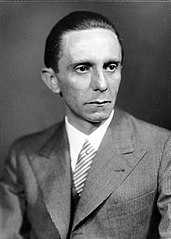
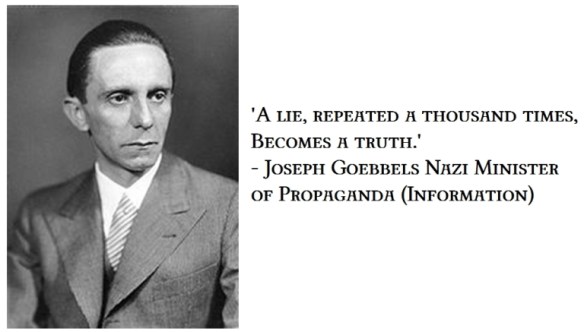
I think that your explanation is correct but I also think it has very much to do with the same effect that elected Hitler as chancellor. It’s a matter of convincing a people that they are victims. It’s a word that we don’t hear much – propaganda. The German word for propaganda in Nazi Germany was Propagandaministerium, which translates to the Ministry of Propaganda. The Reich Ministry for Public Enlightenment and Propaganda was the central institution of Nazi propaganda. It controlled all German mass media, including the press, literature, film, theater, music, and radio. Joseph Goebbels was in charge of the ministry.
— Jim haugh
Make no mistake – if Trump is elected, such practice will become the norm. As it is, his campaign is already using propaganda as the tool to convince the people that their lives are suffering because of the Democrats.
A documentary on how Hitler rose to power
How to win an Audience: Basic Principles of Propaganda from the Diary of Joseph Goebbels
Constantly repeat just a few ideas. Use stereotyped phrases.
Avoid abstract ideas — appeal to the emotions.
Give only one side of the argument.
Continuously criticize your opponents.
Pick out one special “enemy” for special vilification.
I no longer wonder. I think I know
During the Third Reich, the Dutch family of Willem Zuurdeeg defied the laws of Nazi occupation. They became a safe harbor to Jews. He questioned what it was about homo sapiens that led good people to follow a madman. This inquiry became his life quest. His search for answers became his life passion. As a philosopher of religion, his search exceeded the boundaries of any particular school of philosophy.
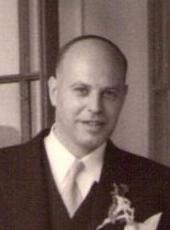
Willem Zuurdeeg was Professor of the Philosophy of Religion at McCormick Theological Seminary in Chicago. His early death at the age of 57 left his work unfinished. He entrusted his work to his colleague, Esther Swenson. She carried it forward to publication under the title Man Before Chaos: Philosophy Is Born in a Cry (1963, Abington Press).
In Man Before Chaos and An Analytical Philosophy of Religion, Zuurdeeg discusses language as the way human beings “establish their existence” in time. We are born in a cry for what is beyond our ability to produce. We are, in Zuurdeeg’s view, less homo sapiens (“man-who-knows”) than we are homo loquens (“man-who-speaks”) and homo convictus (“man-of-conviction”) who look for a secure footing in an anxious world.
Homo Convictus makes easy prey for propaganda. It happened in Germany. It has happened here. God help us!
Gordon C. Stewart, Public theologian, author of Be Still! Departure from Collective Madness (2017, Wipf & Stock), 49 brief, stand-alone meditations on faith and public life. Brooklyn Park, Minnesota, January 14, 2024.
 Views from the Edge