A personal reflection in a mad time

I stood in front of the governor’s mansion in Saint Paul last night, its face lit up by thousands of glowing lights. My apartment isn’t all that far from the guv’s place, and I needed a walk after a long day inside, and suddenly, there I was.

The lights are gorgeous, both the governor’s and a number of nearby homes. No question about that. But last night, those lights did not light up my countenance, at least not in the way they are probably intended to do. Not in times like this. Not after yet two more mass shootings this week; not amidst the recent violence of Chicago and Colorado Springs, Syria and Nairobi, Beirut and Paris. and what continues in north Minneapolis. Not after a day-long barrage of social media opinions IN ALL CAPS — and the predictable defensive responses to those solutions, not to mention the downright nasty ones.

As I walked away from the governor’s house back into the dark of night, I found myself thinking about the advice a guy named Howard Beale had for people in times that seemed remarkably similar to today.

“I want you to get MAD! I don’t want you to protest. I don’t want you to riot — I don’t want you to write to your congressman, because I wouldn’t know what to tell you to write. I don’t know what to do about the depression and the inflation and the Russians and the crime in the street. All I know is that first you’ve got to get mad. You’ve got to say: ‘I’m a human being, god-dammit! My life has value!’ So, I want you to get up now. I want all of you to get up out of your chairs. I want you to get up right now and go to the window. Open it, and stick your head out, and yell: I’m mad as hell, and I’m not going to take it anymore.”

Howard Beale was, of course, the fictional deranged former-television anchor played by Peter Finch in the 1976 movie “Network,” that wildly cynical film from and for a battered time period in our history. His rant is legendary; the last line is considered one of the 20 most memorable movie quotes of all time.

But last night, I found myself wondering if Howard Beale’s colorful and so- oft-quoted last line has affected, and infected, us today in ways that have obscured another message from the movie, one more powerful but far less memorable: I’m a human being; my life has value!

Yes, we ought to get mad about what’s going on in the world today. Yes, the biblical call to justice requires us to raise our own voices to stand with the oppressed and challenge the powers of our world. But yesterday, as my social media feeds piled up, one-after-another, what struck me as self-righteous, power- coveting, fear-inducing I’m-not-going-to-take-this-anymore rants, all talk and no listen, I couldn’t help but wonder about the other part, too: the part about all being human. God’s own. And acting as if we believe it.

Advent begins in the shadows, where people are longing to see a great light. The prophets speak into a world much like our own, “where justice has gone missing and there is no safety in the city. The people are oppressed … the weak are trampled … the covenant with God is broken … there’s no peace in the land … nation rises up against nation … the future looks bleak. In other words, a world not all that different in many respects from our own, (that) seems to have come unhinged, to have lost its moral bearings. The prophet looks out on that world, caught up in war and violence and fear, desperately following ways that do not make for peace, and says, with confidence, The days are surely coming … ” (Thanks, Tim Hart-Andersen, for words that both describe and inspire.)

And so I’ve decided my Advent discipline can be this: to walk to the governor’s house every night I can for the duration of the season, not so the glittering lights might lift me out of the darkness of the season, but so they might remind me to listen more intently for the voice of light in the darkness; to ask intentionally how I might also act with the conviction of the prophet. It’s not enough, I know; not nearly enough. But it’s a start, and it starts here:

I’m a human being; my life has value.

  • Jeff Japinga

    Jeff Japinga

    Jeff Japinga, Transitional Executive Presbyter, Presbytery of the Twin Cities Area, published today, December 3, 2015, in the Presbytery’s online newsletter. Links have been added to the original text by Views from the Edge.

I am the enemy who must be loved

Bill Britton's avatarRicher By Far

“It took me a long time to learn that God is not the enemy of my enemies. He is not even the enemy of His enemies.” Martin Niemöller

“The acceptance of oneself is the essence of the whole moral problem and the epitome of a whole outlook on life. That I feed the hungry, that I forgive an insult, that I love my enemy in the name of Christ – all these are undoubtedly great virtues. What I do unto the least of my brethren, that I do unto Christ. But what if I should discover that the least among them all, the poorest of all the beggars, the most impudent of all the offenders, the very enemy himself – that these are within me, and that I myself stand in need of the alms of my own kindness – that I myself am the enemy who must be loved…

View original post 322 more words

Verse – Septet Cursing Illness

Waking up to the smell of bacon

Waking up to the smell of bacon

I’ve never really liked the bathroom–
Smelly, necessary pathroom.

Kitchens! Can you smell the bacon?
Kneading, rolling, roastin’, bakin’

Frying, broiling, Bar-B-Queing
Even chickens, we are stewing–

Well? In pot, but sick, on pot…

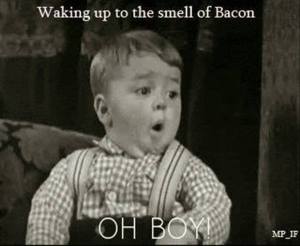
  • Steve Shoemaker, Urbana, IL, Dec. 4, 2015. Photo of Spanky added by Spanky’s partner in crime on Views from the Edge.

NOTE: Steve has been writing this week from the Mayo Clinic where he’s being treated for pancreatic cancer.  Hour by hour is a roller coaster ride from yesterday’s “Celebrating Illness” to today’s “Cursing Illness.” He can still smell the bacon, but he can’t eat it. But  his good humor is in tact. Steve’s friends and family are celebrating him and cursing the illness while following updates on CaringBridge and cheering on his spirit.


Huckleberry Finn and Steve

Steve Shoemaker, my poet colleague on Views from the Edge, is at Mayo Clinic here in Rochester getting a second opinion on newly diagnosed pancreatic cancer and silent heart attack. He recently shared the news with his friends, many of whom had applauded his recent advocacy for welcoming Syrian refugees.

Here’s what Steve wrote:

In Mark Twain’s “Huckleberry Finn,” the young rascal lets his family, and the whole small Missouri town, think he was drowned in the Mississippi River & his dead body carried down stream… And then Huck snuck back into town in disguise and attended his own funeral.

The frequent truant was amazed at all the nice things said about him–even by his school teachers.

This has been my experience the last few days as my serious cancer diagnosis became known, along with a surprisingly positive article in our partisan Republican News-Gazette about Democrat me being critical of Illinois’ Republican Governor refusing State aid, public or private, to vetted Syrian refugees.

As I spoke & wrote about welcoming Syrians, the outpouring of support & personal praise has been amazing…some of the positive words coming even from my grown children (who seeing me up close for years could have written very differently.)

Of course I know after bad news, and at a funeral, critics are silent or absent. I am grateful for both the good words, and the silence!

Illness, diagnoses, prognoses and treatments are personal. Some keep them not only from others but from themselves. Not so with Steve. This is typical Steve. What’s not to love about a humble rascal?

  • Gordon C. Stewart, Chaska, MN, Nov. 28, 2015

Verse – Septet Celebrating Illness

Some medicines make pain go away–
My visitors know just what to say.

Most doctors speak in just the right tone–
I see nurses smile, yes, through the phone.

Family and friends recall each good time–
Poets send limericks–some even rhyme!

Greet each new sun–I’m still having fun…

  • Steve Shoemaker, Mayo Clinic, Rochester, MN, Dec. 2, 2015. Also posted on Steve’s Caring Bridge page.

Nine-tenths of reality on a new/old corner

Thanks to the Chaska Herald for publishing this Opinion commenary last Thursday in advance of the grand opening of Chaska’s redeveloped site, a source of contention and controversy.

PARK PERCEPTION VERSUS REALITY by Gordon Stewart

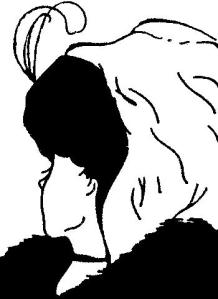
"Illusion"- W. E. Hill

“Illusion”- W. E. Hill

Wednesday, Dec. 2 — after a hard public debate over Fireman’s Park — the newly developed site, with its event center, curling center, Crooked Pint Ale House, and redeveloped park will open its doors to a divided public.

They say perception is nine-tenths of reality. Listening to the public discussion about redevelopment over the past few years, the old adage helps explain the differences in how various Chaska residents view Chaska’s most prominent street corner.

In teaching psychology, a particular drawing of a woman is used to illustrate the power of perception. Every member of the class is asked to look at the same picture. Some see the beautiful face of a young woman wearing a fancy hat with a plume. Others see a mean old woman with an enormous chin and the kind of nose that belongs next to a witch’s brew in fairy tales.

How could different people see the same reality so differently? Or were they seeing different realities? Some who saw the beautiful young woman could not perceive the old woman. Likewise, those who saw the mean old woman could not see the beautiful young woman. Objectively speaking, both women were in the picture waiting to be perceived.
What we see is shaped by memory and experience.

During the debate before the final decision on its redevelopment, many of us perceived the corner as a beautiful park under assault. The memory was of a pristine Firemen’s Park, a lovely open-space created in honor of Chaska’s firemen, green space surrounding the historic clayhole. It was where we went as children or teenagers to swim, fish, or enjoy a family picnic.

Others had a different impression of the corner. Our memory was the truck manufacturer that stood on the corner, an eyesore that struck visitors more like the witch in the psychology class picture. Passersby did not see a beautiful park or green space; they saw a site with no aesthetic sensibility. It was not a corner to be proud of, and it had nothing to do with Firemen’s Park.

No one seems to have remembered what the corner looked like 10 years ago. It would be hard for anyone to look at that the corner of Highway 41 and Chaska Boulevard and say it was beautiful.
Reality may be nine-tenths perception. But the other one-tenths also counts. Sometimes the buried memory lies in the one-tenth we don’t recall.

One of my first days in Chaska in 2006 I stopped in at the downtown Dunn Bros for a cup of coffee. I asked the young person behind the counter to tell me about Chaska. “Which Chaska?” he replied. “Old Chaska or new Chaska?” I was surprised; I didn’t know there were two. He explained that I was in old Chaska; new Chaska was up the hill.
In American general perception — sad though it may be — new means young and vibrant, like the beautiful young woman. Old means over-the-hill and dying.

All across America, downtowns are either crumbling with boarded-up businesses or they are being successfully redeveloped to preserve, re-populate, and energize them in ways that overcome the old-new divide.
The promise of the new site is that younger people from far and wide will be drawn by its beauty for curling, a pint of ale and a hamburger with a beautiful view of the clayhole, maybe a fishing rod, and a stroll on the new walkways around the old park.

Chaska redevelopment at corner of Chaska Blvd. and State Highway 41

Chaska redevelopment at corner of Chaska Blvd. and State Highway 41

As one of Chaska’s more un-athletic residents, older in age but newer to the city, I’ll be there Wednesday, where the forgotten eyesore stood, to learn a new sport that won’t threaten my health and celebrate the renewed promise of a thriving “old Chaska.”

  • Gordon C. Stewart, Chaska, MN, Dec. 2, 2015

Verse – A Septet of Gratitude

Seven blessings seven prayers,
Leave for now our many cares.
Light a candle, sing a song,
Join with others, do no wrong.
Friends and family, music, art,
Books, food, knowledge–play a part;
Thoughts arrive: thanks, I’m alive.

  • Steve Shoemaker, Urbana, IL, Nov. 25, 2015

Thanksgiving

“If the only prayer you said in your whole life was, ‘Thank you,’ that would suffice”. – Meister Eckhart (1260-1328).

  • Gordon C. Stewart, Lincoln, NE, Thanksgiving Day, 11.26.25

Verse – Thanksgiving (acrostic)

Thanksgiving Pilgrims and Wampanoag all

Huddled together to eat by the fire.

After the Palefaces learned to trap fowl,

Native Americans also taught fair

Knowledge of maize farming. They heard of God’s

Son who had died for them, teaching of love.

Gathering to offer thanks for the goods

Ingathered at harvest, both of them have

Very much happiness to celebrate.

In years to come would be broken treaties,

Native folks killed, forced to flee or to fight.

Give thanks at least for a few meals in peace…

  • Steve Shoemaker, Urbana,  IL

Verse – A Septet for My 70s

Verse — A Septet for my 70s
(Late-blooming Stoner)

I was not a ’60s child–
Yes, it’s true I had a beard,

But the Church beat in my head
That at all times choose the good.

Do not drink and do not smoke…
Not to mention, do not toke…

Now the pills for all my ills.

  • Steve Shoemaker, Urbana, IL, Oct. 24, 2015