The Web of Sanity and Fullness

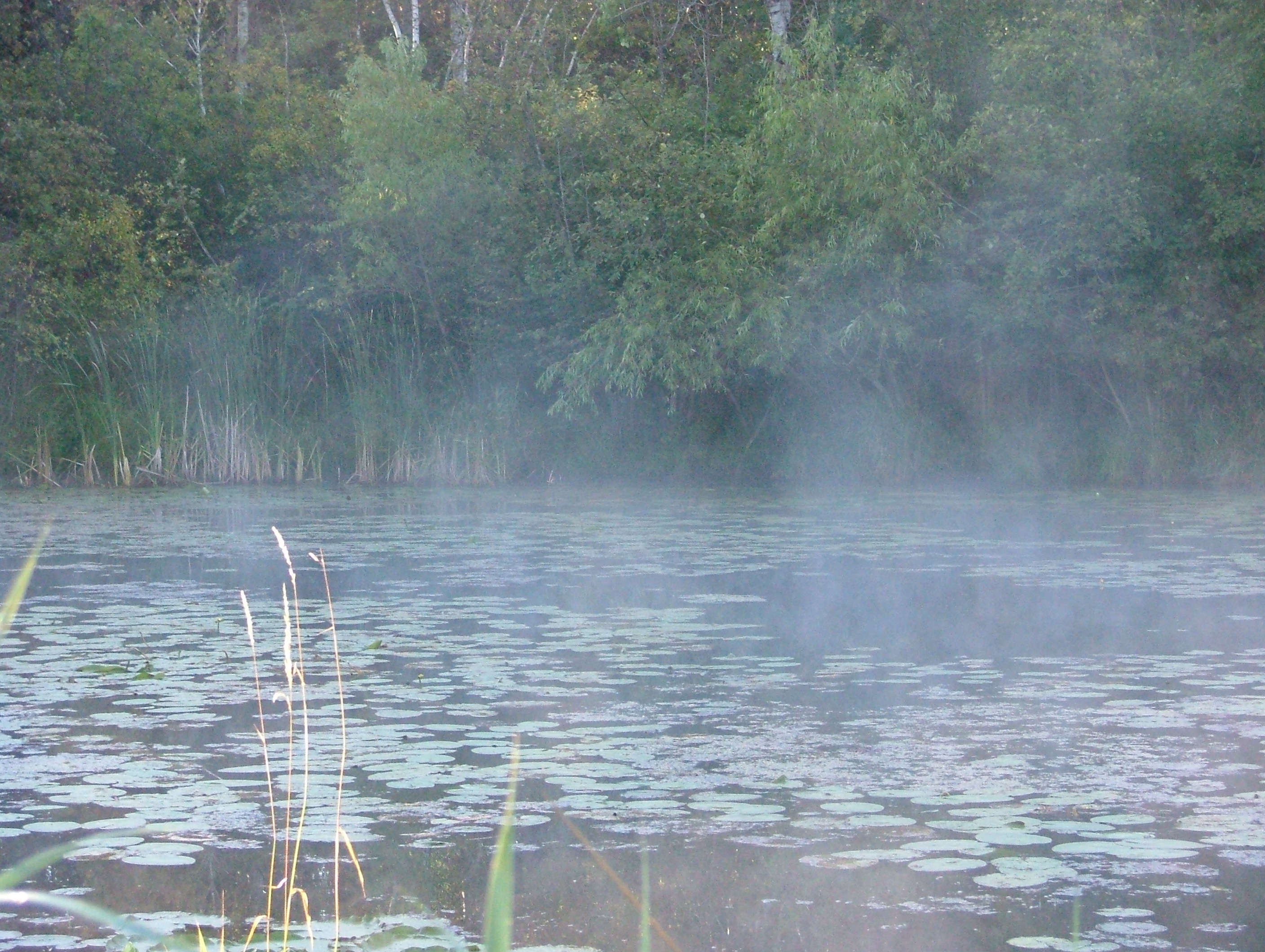
Pond with morning mist evaporating

Pond with morning mist evaporating

A newspaper reporter asked me some questions. We were preparing for a First Tuesday Dialogues series on sustainability called “The Good Green Earth.”

The series would bring five speakers, including  spokespeople from the Gulf of Mexico deeply engaged in hazard assessment, technology, and recovery in the wake of Deepwater Horizon.

What’s your sense of the possibilities and trends for sustainability in your work now and what does it look like in the future?

I responded that one of my inspirations is Paul Tillich, according to whom:

Being religious means asking passionately the question of the meaning of our existence and being willing to receive answers, even if the answers hurt.

Faith consists in being vitally concerned with that ultimate reality to which I give the symbolical name ‘God’. Whoever reflects earnestly on the meaning of life is on the verge of an act of faith.
The Spider’s Web with Morning Dew

My calling as a pastor was to help us here at Shepherd of the Hill and here in Chaska literally “go out of our mind.”

Because the collective mind that has delivered us to this place is killing us and destroying the balance of nature.

My calling is to shake us loose from the mental and spiritual chains of species superiority, My calling is to shake us loose from the mental and spiritual chains of species superiority, the mistaken notion that we – humankind – are the exception to Nature.  It’s a call to help re-shape our understanding of ourselves as participants rather than owners, participants rather than conquerors or manipulators, members of a diverse natural order of interdependent life. The spiritual resources are there in Hebrew scripture, in the New Testament epistles to the Ephesians and the Colossians, and in the ancient respectful spirituality of some of America’s indigenous people. By “going out of our mind” we will come back into a the web of sanity and fullness.

What factors do you see pushing towards or against sustainability?

Historian of science and technology Lynn White said flat-out that the root problem of the sustainability crisis is religious or spiritual, and so is the solution.

So, number one, we have to address the old and emerging questions about what Tillich called “Ultimate Reality” and the meaning of our existence.  We have to go into labor to set the new theological and anthropological  paradigm free from of the old destructive thinking.  What we are beginning to find as we go into this spiritual labor is that this more respectful, more holistic way of thinking is not new at all – it’s the older paradigm that got side-tracked by greed and pride.
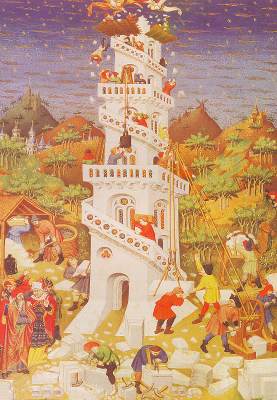
Building of the Tower of Babel – Master of the Duke of Bedford

God has “come down,” as it were, to frustrate our attempts at building the secure city called Babel; God is making us nomads again who recognize that we and the Earth are already full, not empty. Every settlement comes to nothing. Every tower built as a monument to pride falls. And number two, and I’m afraid there is no other way to say this – we will never make it without leaving behind the economic system of greed. Capitalism is killing us.

The consolidation of wealth and corporate power have a stranglehold on national, state, and local public policy. The members of the boards of the oil companies sit on the boards of General Motors and Ford.  So it’s no wonder that U.S. federal policies on transportation are car-friendly and suspicious of mass-transit, regardless of a car’s gas mileage. Osalescence is built in because you can’t sell something five years from now if the old model is still like new. Our health care and the FDA are in the palm of the insurance and drug company’s so that it’s illegal to go across the border to fill your prescription in Canada.

Finally, the sustainability of the human species itself is, I believe, imperiled by chemical alterations that are meant to do good but that, in the long run, make us biologically less resistant and resilient. Our natural immune systems are being weakened by pesticides in the food we eat and by the pharmaceuticals we ingest from the drug store.

Black tar heroin - U.S. Drug Enforcement Administration

Black tar heroin – U.S. Drug Enforcement Administration

We have become a nation of addicts.  Addicted to illusionary dreams of abundance.  Addicted to prescription drugs.  Addicted to fast food and faster short-term solutions. Even instant gratification is too slow. Controlled by advertizing that sells us prescription drugs that’ll give you an immediate erection but may send you to the emergency room if it last more than four hours,or drugs that may ruin your liver or land you in a casket, and the real pushers are not the petty drug peddlers on Minneapolis’s North Side. The real pushers are legal. They’re given license, while those who would shut them down are looked upon as crackpots and throw-backs who are opposed to progress.

So…what’s stopping real progress, a more Earth-friendly way of organizing human affairs that embraces reality itfself, “Being-Itself”?  The intransigent, legal, institutionalized arrangements of power and money, on the one hand, and our willing compliance with the de-democratization of America that salutes the system of greed. We have to learn again, and we are – very slowly –  pushing and screaming, that “the Earth is the Lord’s and the fullness thereof”. We have turned it over to the forces of greed and destruction.

The Good, Good Earth: Our Island Home

The Good, Good Earth: Our Island Home

We need to recover the gratitude and spiritual paradigm of a natural abundance in order to push against the false promises of those who would have us believe that our lives and the world would be empty without all the stuff that ends up in the landfills or washes ashore in the estuaries of the Gulf of Mexico.

So……Chime in, friends. How would you answer the reporter’s questions?

Watch Dynamic speech on “My Energy Plan”

President Gerald Ford addressing the nation

President Gerald Ford addressing the nation on energy policy

Click HERE to be blissfully inspired by dynamic speaker President Gerald Ford’s speech on energy policy and Congress “doing nothing to end energy dependence,” including a call for “a windfall profits tax on oil companies,” complete with equally dynamic props. “Nothing has been done since January!” “We must get on with the job RIGHT NOW. Thank you, and good night.” – 1975

reflections in a dew drop

Reflections on a Dew Drop

Gordon C. Stewart

Born in water – in a Mother’s womb

the sea of amniotic fluid

– the primordial sea

from which all life begins

“Dust to dust, ashes to ashes”

we say at the end

but it’s the water that goes first

– the one percent

that makes the dust

dance and glisten

into consciousness.

i stand on the porch in the morning

camera trained on a dew drop

hanging from a leaf.

In the drop i see a human reflection

– me with my camera –

And i wonder.

 Am i looking at the dew drop?

Or is the dew drop looking at me?

  Or perhaps there is no ‘it’ or ‘i’,

But a Sea of water everywhere,

an All that contains us all.

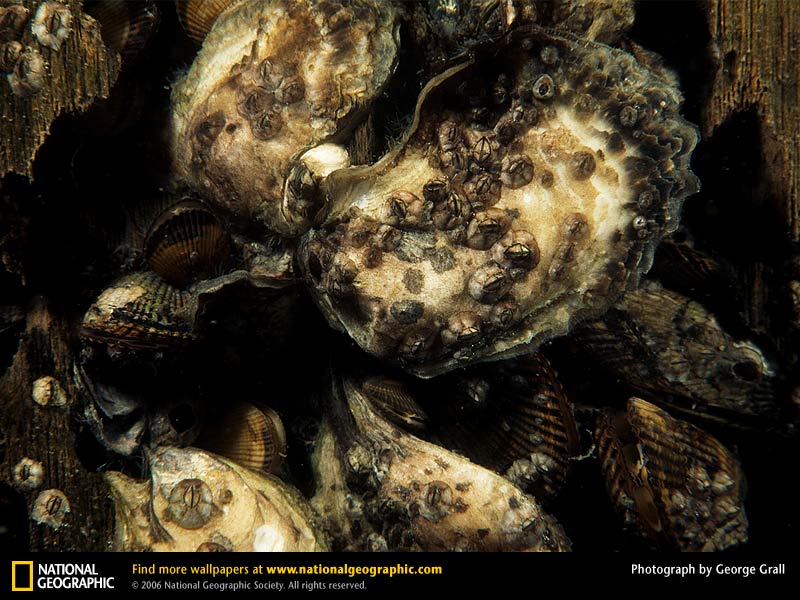
The World in an Oyster – an Earth Day reflection

Oysters

A COMMENTARY FOR EARTH DAY – Rev. Gordon C. Stewart | Friday, June 4, 2010 – published by MinnPost.comThe “spill” in the Gulf of Mexico raises the most basic questions about how we humans think of ourselves.

We’re at a turning point. The crisis we can’t seem to kill in the Gulf of Mexico puts before us the results of a more foundational crisis than the black goo that is choking the life out of the Gulf. The uncontrolled “blow-out” raises basic questions about how we think of ourselves and the order of nature.

Fifteen years ago I was with a group of pastors who spent four days with the Chesapeake Bay Foundation, whose mission is to protect and clean up the Chesapeake Bay. Our time there began with a day on the bay on a Skipjack, one of the last remaining motorless sailing vessels that used to harvest oysters by the tens and hundreds of bushels from oyster beds. The director of the Chesapeake Bay Foundation and an old waterman named Earl, who had worked the bay for 54 years, took us to school.

Back then the oyster population had shrunk to a fraction of 1 percent of what it used to be. Fifteen years before our visit the oyster population would filter all the water in the bay in three days’ time. A single oyster pumps five gallons of water through its filtration system every day.

The oysters were close to extinction; the bay’s natural filtering system was in danger. “It’s humans who’ve done this,” said the old waterman. “They’ll come back; I have to believe they’ll come back.”

Others were less hopeful. The Maryland Department of Natural Resources discussed the damage to the wetlands and the estuaries, the seedbeds of life. It had sounded the alarm for public action to protect the birthplaces of all the seafood we eat, the places on which the whole chain of life depends.

Deepwater Horizon fire

This week we heard from the Gulf of Mexico that the attempted “top kill” has failed and that the “spill” is spreading in every direction — not only on the surface, but below the surface — a glob the size of the state of Texas. I think of Earl and his Skipjack as I see the poisoned oysters in the hands of Louisiana oystermen whose livelihood depends on clean Gulf waters. “It’s humans who have done this.”

But it’s not every human who has done this violence to the Gulf. It was not the indigenous people of North America, nor was it the Moken people (“the sea gypsies”) who, because they see themselves as part of nature, anticipated the 2004 Asian tsunami while the rest of the world was caught by surprise. It was a specific form of humanity known as Western culture that sees humankind as the conqueror of nature.

Our language is not the language of cooperation with nature. “And God said, ‘… fill the earth and subdue; and have dominion over the fish of the sea and the birds of the air and over every creeping thing that creeps upon the earth’ ” — (Genesis 1:28), a conquering view based in the idea of species superiority expressed in the phrase “top kill” for the attempt to plug the hole that is killing the oysters and fish of the sea.

Insofar as interpreters of the Book of Genesis have shaped this Western hubris, my Judeo-Christian tradition bears responsibility for this crisis. The idea of human exceptionalism springs from the Bible itself.

But no sooner do I sink into confession and despair than I remember a prayer that Earl called to my attention on the Skipjack 15 years ago, the prayer of St. Basil from the third century that offers a more hopeful understanding of ourselves, a view like Moken people’s that knows that the whole world’s in an oyster:

“The Earth is the Lord’s and the fullness thereof. O God, enlarge within us the sense of kinship with all living things, our brothers and sisters the animals to whom You have given the Earth as their home in common with us. We remember with shame that in the past we have exercised the high dominion of man with ruthless cruelty, so that the voice of the Earth, which should have gone up to You in song, has been a groan of travail. May we realize that they live not for us alone, but for themselves and for You, and that they have the sweetness of life.”


Muskrat Heaven

A story in preparation for Earth Day, April 22, 2012

Muskrat

I stand looking through the picture window at the pond behind the house.  The small nature raft in the middle of the small pond is peopled with Canadian geese preening in the mid-morning sun.   To their left, three or four ducks paddle across the pond – but something is different.

They’re moving much faster than usual. They don’t seem frightened; they’re just moving faster.

Then I see why.  A muskrat is chasing them – ten yards or so behind.  I’ve seen this before – mallards and muskrats playing a game of catch us if you can.  Speed up, slow down, speed up.  Nobody ever catches anybody and nobody ever gets caught.  They just chase and get chased.  It’s play.

As the mallards paddle past the raft with the muskrat in hot pursuit, the muskrat makes a sudden 90 degree turn, races at full speed and leaps up for the raft, the geese flapping their wings, scattering in flight just as the muskrat lands and springs into the air. A flying-muskrat in hot pursuit, an air-Jordan muskrat suspended in mid-air, a flying goose wanna-be, leaping and laughing for joy. Muskrat heaven!  Sheer unadulterated play.

I envy the muscrat, the ducks and the geese today. I know I’m making the story up, but the story I tell speaks aloud a yearning for more playfulness.  An enjoyment of each other with natural games that keep away the boredom and challenge our pretensions.

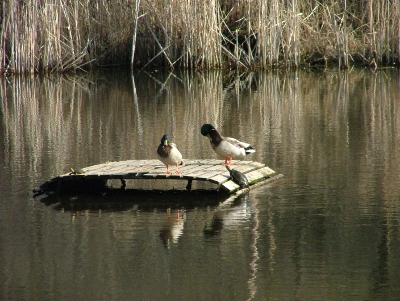
Nature raft with mallards

Nature raft with Mallards

I watch the pond a lot these days to learn about myself and us.  Oh, I know!  There’s also terror and danger in that pond – the snapping turtle lurks beneath the surface, the fox roams the edges, and my neighbor sometimes stands on his deck with his shotgun aimed at the little muskrat who dares to burrow his home under his manicured lawn.  But today all of that is beside the point – upstaged by ducks and geese and a muskrat in self-forgetful play. I stand looking through the window and give thanks for quacking mallards, honking geese and a funny little creature whose muskrat heaven restores my natural sense of play and joy.

A Visit with Mary

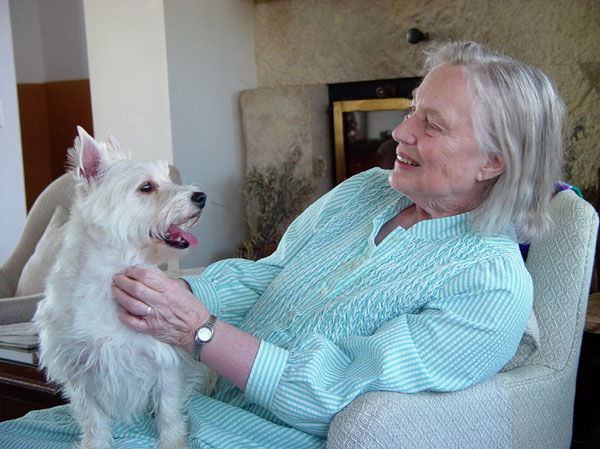
Mary with Maggie

Mary with my dog Maggie

Visiting with a 91-year-old friend with terminal cancer, the discussion turns to her final wishes.  Mary is a child psychologist by profession, a retired professor whose pioneering work with children at the University of Minnesota and Minneapolis’ Children’s Hospital is a legacy that will remain long after she is gone.

Raised in a strict Calvinist Christian tradition in Michigan, her soul long ago had come to drink from gentler wells – the quiet gatherings of the “Quakers,” the naturalist spirituality of St. Francis of Assisi and of American indigenous spiritualities that saw the sacred in the cirrus clouds, the fluttering of a leaf, a chickadee at the bird-feeder on the deck, or the circling of an eagle overhead.

When her husband died three years before, the family gathered privately to inter Doug’s ashes in a small opening in the woods on their farm near Wabasha. Doug, like Mary, is legendary in Minnesota…in a different sort of way…the street lawyer with the pony tail who started and led the Legal Rights Center with leaders of the American Indian Movement (AIM), the chosen intermediary between the federal troops and the AIM members at the Wounded Knee occupation in 1973 – Dennis and Russell Means, Clyde Bellecourt, Leonard Peltier, et. al..

The family marked the spot with four stones pointing North, East, South and West – the “four directions of the four corners of the earth.”  Early the next morning, the day of the public celebration of Doug’s life, one of Doug and Mary’s daughters had walked out to that tiny clearing in the woods. A bald eagle was sitting very still in the center of the four stones above Doug’s ashes.

I asked Mary at the time what she made of that.  With great respect, she paused…and said she didn’t know, and something to the effect that native peoples seem to be in touch with mysteries that elude the rest of us.  er statement struck me at the time because in our talks about death and dying, she had always indicated that she believed that life is lived between the boundaries of birth and death.  The eagle sitting on Doug’s ashes in that tiny opening in the woods didn’t seem to convince her of something beyond the grave, but she held a kind of sacred openness to the possibility, a respectful not-knowing about human destiny, the universe, and our place in it.

Now, three years after Doug’s death, we sit together, as we often have, over a lunch of shrimp, salad and fresh bread at the table that looks out at the bird feeders in the old converted mill on the farm up the hill from Wabasha.  Three of her five children are there.

Missy asks Mary whether she has told me her plans for her service when the end comes. There is a long silence as she goes away to some far off inner place – some wooded glen where no one else can go.  Her eyes are distant, dream-like, looking off to some far off place, sorting through her long spiritual journey to fetch the right words out of the forest of 91 years of memory.

Finally she speaks… softly.  Quietly.  Deliberately. “I want you to do the prayer and I want the benediction.”  “What kind of prayer?” I ask.  She looks at me quizzically, as if I should know.  “Something classical with the gravitas of tradition?”  “Yes,” she says.  “And what kind of benediction?” I ask.  “Blessed are the peacemakers,” she says.  “And music. What about music?”  “Oh, yes” she says, “Bach, Mozart, Beethoven…and ‘Let there be peace on Earth’”… and she wanders off again into that most personal space where no one else can go.

Ninety-one years summed up in four-words “Blessed are the peacemakers” from Jesus’ Sermon on the Mount.

She is growing weary now. It’s time for her afternoon nap.  We say good-bye. I leave this sacred place of Mary’s world, get behind the wheel to drive home, turn on the radio, listen to news that is so far removed from Mary’s world and Jesus’ with all the saber-rattling and the name-calling, and I wish we all could have lunch with Mary or take a walk to the wooded glen where the eagle sat still above Doug’s grave at the center of the four corners of the earth.

———————————————-

For eight years Doug and Mary Hall’s farm was a second home. Mary’s pensive spirit and Doug’s activism made them natural parents of the state-wide movement for restorative justice in Minnesota and the Minnesota Restorative Justice Campaign.

Blessed are the peacemakers. RIP.

Global Thaw

Mid-March

Minnesota

Gentle rain

Global thaw

Mid-March

Madness

This morning it was hot enough to fry and egg on the pavement… in Minnesota.

Anyone else think the absense of climate change/global warming/global thawing from the national spotlight on the way to a national election is madness?

Just asking.

Silence and Cell Phones

This piece originally aired on “All Things Considered” (Minnesota Public Radio). Click here for an audio connection on the MPR site, or just read the piece.

Driving to work this morning, I suddenly started to pay attention to the drivers in my rear view mirror.  It all started when a large SUV nearly hit me from behind.  The driver was jabbering away on a cell phone.  I’m sure the conversation was important.  Why else would he jeopardize our safety?

For the next fifteen minutes on I35W I conducted my own scientific survey.  All of the drivers had cell phones glued to their ears.

Makes me wonder.  Are we that uncomfortable being alone?  Or do we think we’re so important that the rest of the world can’t get along without us?  Or perhaps we are afraid that the rest of the world WILL get along very well without us – so we need to keep reminding others that we exist because we’re not sure we really do unless someone else is filling the speechless void?  I wonder.

As concerned as we should be about the terrorism of distracted drivers on the highway, I’m more concerned about what our use of cell phones says about us as a people.  We are addicted to outside stimuli. Less and less comfortable with silence. Less and less attuned to wonder. More and more filled with chatter. More wordy – less thoughtful.

Sociologist Eugen Rosenstock-Huessey once observed – before the advent of the cell phone – that for many folks the drive to and from work was the only true “free zone” during their day.  It was time for solitude and reflection, a transitional pause to get your bearings, time to make the transition from home to work and from work to home. These were trips to be celebrated for what they were – opportunities to stand free from the herd – the herd mentality of religion, nationalism and ideology.  They were times to think.

Maybe I’m just getting older.  I am.  And that’s a good thing.  Because I’m getting tired of looking in my rear view mirror at someone with a cell phone stuck in his ear because he can’t stand the silence…or the sound of her own heartbeat.  Someday that beat will stop and there will only be the silence.  Maybe we ought to put down the phone and listen before there’s nothing to hear.

Jonathan and “the Good Society”

Each of us has in idea of the way the world should be. You might call it “the good society,” the one we would create, if we could.

The idea of the Jonathan Association comes close to mine. I moved into the Jonathan Association, America’s first “New Town”- the dream of Henry McKnight, last spring without knowing much about it, except for the reputation it had received because of a raucous Annual Meeting four years.  Back then and again this year (read the Chaska Herald story), those who wish to withdraw from Jonathan have almost succeeded in destroying the Association by maneuvering to dismiss the entire all-volunteer Board. What happened at this year’s annual meeting reminds me how ugliness and beauty are in the eye of the beholder. To the detractors, Jonathan is ugly. To me, it’s beautiful.

The world I chose to live in exceeds my expectations and makes me scratch my head over the attempts to do it in. Like all other homeowners within Jonathan, I pay an annual fee. Others resent the Association dues. They don’t see the return.

What do I get for it? And what would I lose if the Jonathan Assocation suddenly vanished?

I get a neighborhood with 10 miles of well-kept, snow-cleared walking trails, large open spaces (“common” spaces) like the field adjacent to the sledding hill and “Purple Martin Heaven “ (76 Purple Martin houses) to which 100+ Purple Martins return each spring to swoop and dive across the open space. There’s Lake Grace and McKnight Lake, the streams, and the beautiful well-kept woods of giant willow trees, maples, oaks, flowering crab and cherry trees…and doggie bags for my morning and evening walks with Maggie and Sebastian.

I get the legacy of Jonathan founder Henry McKnight’s vision. McKnight believed that “the major opportunity with a New Town, such as Jonathan, is to plan the community for minimum negative impact on the environment, while making sure that the people who live there will enjoy that quality of life that makes living worthwhile.” Jonathan was to be an experimental, utopian community (eventually growing its population to 50,000) that would co-exist in perfect harmony with surrounding nature – an outcome different from the suburban sprawl that he found so disorderly and unpleasant. “We must utilize the land with full regard for the quality of the environment people seek,” McKnight said. “Planning a New Town like Jonathan offers us the opportunities to preserve the natural environment, conserve our remaining resources, and even improve the countryside.”

But I love Jonathan for more than its natural beauty. More than its commitment to conservation and good stewardship of the land. Jonathan is more than itself, a dream of a a society worthy of our highest aspirations. It’s a dream of a real community of belonging. Wealthy one-percenters, low-income, and middle class – private homes and affordable housing, rich and poor and middle class TOGETHER, not separated by freeways or gatekeepers. White, black, yellow, red and brown living side by side because that’s the way the world should be. Christians, Jews, Muslims, agnostics, atheists, Baha’i’s ,secular humanists Republicans, Democrats, Socialists, Independents, and Tea Partiers living in together respectfully. It’s a place for people who want neighbors and who want be a neighbor. What a concept. In Jonathan I deal with the world, not escape it, and it’s a microcosm of what I wish for the world itself.

Is it perfect? Not by a long shot. But maybe that’s its beauty. It’s a collection of imperfect folks doing the best we can to answer Rodney King’s protest against a world divided against itself, “Can’t we all just get along?” Yes, we can. If we try. If we choose to do so. If we work at it.

Jonathan began as Mr. McKnight’s personal vision.  He died unexpectedly at the age of 59 before he could realize the dream. Now it is up to us who have inherited his vision to continue it, embrace it, and strengthen it as our own.

The Jonathan I now know by experience bears no resemblance to the loud noise a few of the neighbors who think they’re getting nothing for their modest annual assessment, or that they should get something for nothing, or that Mr. McKnight’s vision was wrong, and that we should have no trails, no parks, no shared common spaces, no Purple Martin Heavens, no snow-cleared walking trails, or cared-for common areas. Maybe just a jungle of selfishness would feel better. But my dogs know better. They’re so glad my neighbors and I pay to make their walks a thing of beauty and joy.  Sometimes our pets know better than we to give thanks for what we too easily take for granted.

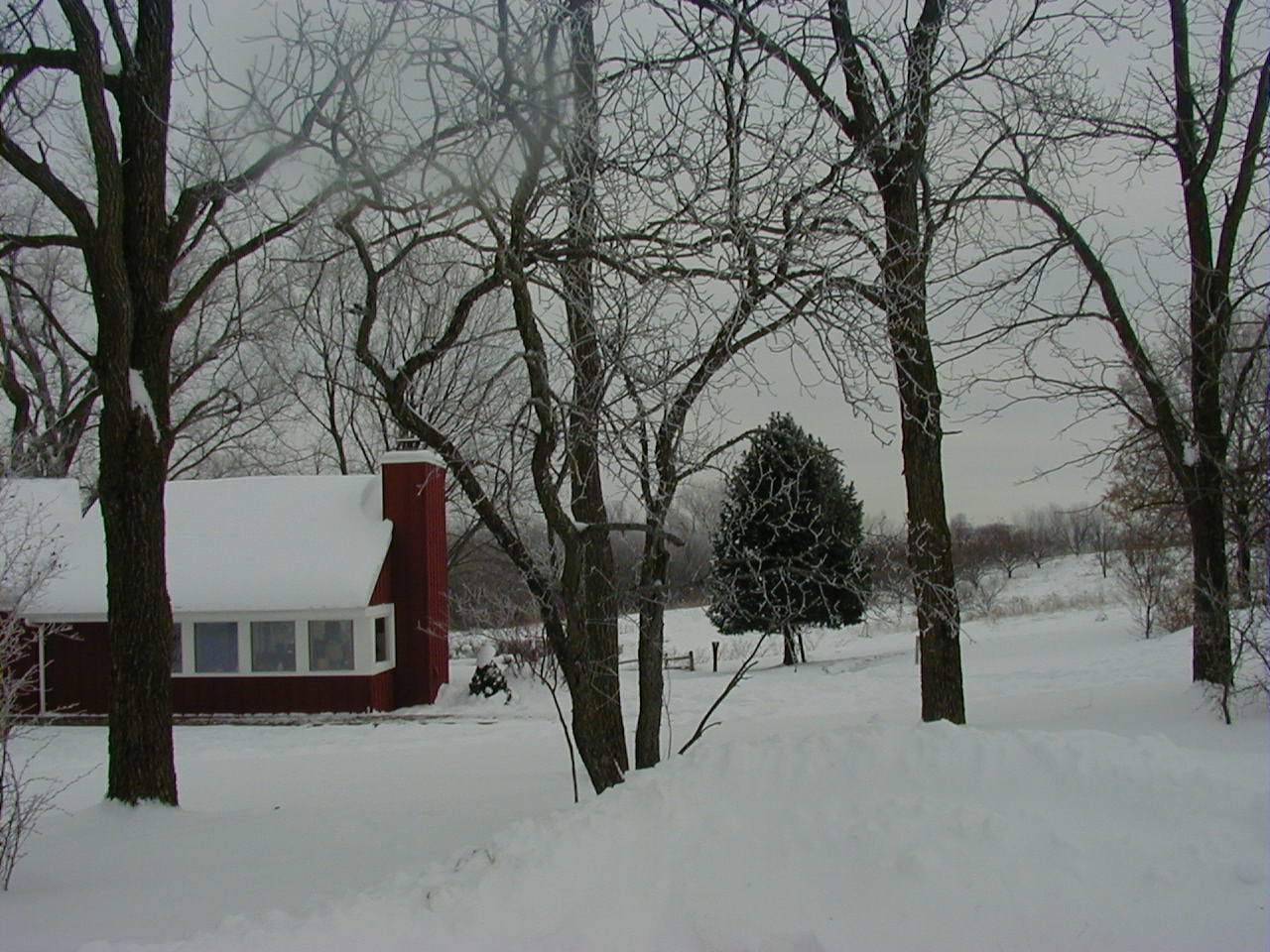
Climate Change reflection

Climate Change reflection.