American ICE and a BURNING COAL from the Altar

“Here am I,” says Isaiah, ”Send me,” in reply to the question of the Holy One,” “Whom shall I send? Who will go for us?”––Young’s Literal Translation

Christian Nationalism is a Parasite

Propaganda is a parasite. It can’t live without a host. ‘Christian Nationalism’ sucks the blood out of sacred texts. Few biblical texts are as beloved as the calling of Isaiah. In the original Hebrew text, Isaiah speaks in the present tense: “In the year that king Uzziah died, I see the Lord, high and lifted up, and his train is filling the temple.” He sees the seraphs flying above the throne, singing “Holy, holy holy, [is] Jehovah of hosts, the fullness of all the earth [is] his glory.”

A Homeland Security promotional recently featured an ICE recruit attributing his sense of call to become an ICE agent to Isaiah in the temple, “Hear am I, Send me.” The Homeland Security promotional [since taken down from X] turns Isaiah’s call into a parasite that sucks the blood of compassion from its host. “We will cut you down,” the voice-over of a helicopter sighting two migrants moving through the night toward the U.S. southern border, displaces the “Holly, holy, holy.” The whole earth that is full of God’s glory is shrunk to the parcel of earth.

An Autobiographical Reflection

It was in college that the calling of Isaiah took hold of me. I don’t remember who put Frederick Buechner’s The Hungering Dark in my hands, but I’ve never forgotten the impact of Buechner’s reflection on the call of Isaiah (Isaiah 6:1-8). I was not in the Temple in Jerusalem; my dormitory room was not filling with smoke; I knew nothing of seraphim, let alone seen them flying overhead or heard them calling to each other their song of praise for God’s holiness. No seraph had touched my lips with a hot coal from the altar. Even so, I knew this story the way a child ‘knows’ a story before the codes of reason ridicule its sense of wonder. Like Isaiah in the year that King Uzziah died, the foundations of what I once thought to be solid were trembling. The world was a mess. So was I. I was a man of ‘unclean lips’ living among ‘a people’ of unclean lips.

The summer before reading The Hungering Dark, my foundations had been shaken by the daily trips on the Red Arrow bus and Philadelphia subway that took me back and forth between where I lived and the squalor of Opal Street in north Philadelphia. Two landmark institutions gave stability to north Philadelphia: the Pennsylvania State Penitentiary and Corinthian Avenue Chapel. The eight homeless men with whom I had spent the afternoons that summer had been guests of the penitentiary before they were released to the streets. Corinthian Avenue Chapel, the empty shell of a once thriving Presbyterian church, vacated by white flight, was three blocks north of the prison.

It was a game of dodgeball with the kids who lived in the tenements on Uber Street that introduced me to the men of Opal Street and set the course for the rest of the summer. There was no traffic on Opal Street. My focus shifted from working with kids to an altogether unexpected summer with “the Brothers of Opal Street.”

An errant throw sent the dodgeball through the circle of ‘winos’ (their designation, not mine) who gathered every afternoon, seated on wooden orange crates, in the middle of Opal Street . After apologizing for interfering, I continued walking to the far end of the block. Like the condemned tenements that lined the east side of Opal Street, the far end of the street was blocked by a boarded-up fence. The chalk outline of a body was still fresh on the pavement

When I returned with the ball, the men asked what I was doing there. When I spoke of games for the kids, one of them drew laughter when he asked, “Do you have any games for us?” “I do,” I said. “Any of you ever play quoits?“ “Quoits?” Again there was an uproar of laughter. “Well, how about horseshoes?” Corky had played horseshoes in the Army. The next day I set up the Quoit stakes on the street. Every afternoon, we played Quoits until the men could no longer stand.

On my last day with them, the men wanted to have “a little talk.” I had expected the sharing of good-byes. What happened was something else. In retrospect it was life-changing, A one-of-its-kind Isaiah in-the-Temple moment. No seraphim flew above us, singing “Holy, holy, holy.” But there was smoke, a red-hot coal striking my lips, and a realization that I was a man of unclean lips among ‘a people of unclean lips’.

“Why did you come here?” they asked. “Don’t come back here. ‘Your people’ own this place. Look around. You don’t see any white faces. Your people never show up around here, but they own this place. It’s too late to help us. But the kids? If you want to make a difference here, go back to ‘your people’ and change things there.”

I had come to Opal Street as a disciple of Jesus, wanting to be of service among the “less fortunate,” like the good Samaritan who crossed the road to show compassion to the man who’d been left half-dead in the ditch. It had seemed that simple at first. I had assumed the western Main-line suburbs and Opal Street were worlds apart. One was wealthy, the other was poor. One was white, the other was black.

Now, after a long, hot summer, the ‘winos’ and ‘junkies’ of Opal Street had shattered the myth of separate worlds. Power and powerlessness, parasites and hosts live in the same world. I returned to college, confused, at sea, questioning everything I had been taught, and threw myself into contemporary philosophy and political science in search of answers to questions that have lasted a lifetime.

Years later, Kai Erikson’s Wayward Puritans provided a sociological framework that deepened my understanding of why and how we human beings ‘other’ each other. Cultures need deviants, outsiders, stereotypes who threaten the majority’s view of itself. Witches became the scapegoats that served to define what the majority was not. The Massachusetts Bay Colony was Christian and moral; witches were neither. The witches of Salem, the banishment of Mr.s Anne Hutchinson and the execution of Mary Dyer, served to save the Bay Colony’s religious–racial consensus from fraying further.


A BURNING COAL melts ICE

The Department of Homeland Security likening the call of Isaiah to a call to join ICE is chilling. It’s bad theology, bad faith, and bad patriotism. But heat always melts ice. Isaiah’s calling is remarkable for its sense of holiness and wonder. The Homeland Security rendering of “Here am I, Send me” is a call to cruelty and unmatched power over the ‘other’. It confuses divine calling with a call to dominate. In the ICE propaganda, there is no sense of the young man feeling lost, no sense of woe, no awareness of unclean lips or of one’s own people as a people with unclean lips, no hot coal from the altar burns away the sin. ICE’s adaptation of Isaiah is a parasite. It replaces the burning coal with an ice cube. Where the seraphim sang of the whole earth filled with God’s glory, border patrol helicopters buzz overhead migrants seeking a better life with the message, “We will cut you down!”

Every person of honest faith and good will is being called in this moment of American history to answer “Here am I, Send me!” Isaiah’s call is not past tense. It is now.

Gordon C. Stewart, Presbyterian Church (USA) pastor and public theologian, author of Be Still! Departure from Collective Madness (2017 Wipf and Stock), writing from Brooklyn Park, Minnesota, August 6, 2025.

Elijah Cummings: toward a better ‘us’

Rep. Elijah Cummings (RIP), former Chair of the U.S. House of Representatives Oversight Committee

We have met the enemy

STOP! Listen up!

Groaning too deep for words

Reflections on June 14: A Day of Unity and Tragedy

Melissa Hortman

It was the day a gunman killed Minnesota Speaker of the House emerita Melissa Hortman (DFL-Brooklyn Park), her husband, Mark, in their own home, and critically wounded Sen. John Hoffman (DFL-Champlin) and his wife, Yvette, in their home.

A Brooklyn Park Police advisory to secure our property and stay put during the search for the suspect.

Downtown Interfaith Clergy Statement, Jun 14, 2025

Mercy vs. Vengeance: Insights from Psalm 94

Personal Reflections in a time of vengeance

Before Mitchell Dahood’s Anchor Bible Commentary on the Psalms (Psalms II) caught my attention, I had read Psalm 94 as addressing ‘the God of vengeance’. I don’t like vengeance, retaliation, or retribution. I see their results every day in others and in myself. “I am your retribution,” says Donald Trump on the campaign trail. The way of Jesus counters vengeance with mercy, retaliation with forgiveness, retribution with the sweet taste of kindness. 

It was the God of vengeance whose wrath terrified Augustinian monk Martin Luther until Paul’s Epistle to the Romans relieved his distress. “God of vengeance” is mistaken; God was sovereign, yet His heart was for us; not against us. We were no less sinful than Luther had said, but Divine love surpasses our sin. One is ‘justified’ by divine grace through faith.

Father Dahood, Professor of Language and Literature at the Pontifical Institute in Rome, translates the Hebrew word which most translations render as ‘vengeance’ altogether differently. Psalm 94 addresses” the God of vindication.”

I confess that I sometimes hope for vengeance. “’Vengeance is mine; I will repay,’ says the Lord.” So where is it? Is it hiding? If so, why? Is it a projection? Painting God in our image? A Benedictine spiritual guide once replied to my statement, “I don’t believe in Hell” with “Well, we Benedictines say that Hell is real… but there’s probably nobody in it.” The monk was preserving God’s sovereignty as Judge, while maintaining  God’s essence as Love.

Whether it’s God of vengeance or vindication, I feel the psalmist’s cry for God to show up, shine forth, come out of hiding.  Show Yourself. Vindicate Yourself!

Dahood’s translation is also strange for spelling out  the Hebrew Name for God. The Hebrew name was originally four consonants without verbs: YHWH, the inscrutable Name given to Moses out of the burning bush on Mount Horeb. “I Am,” “I Am Who I Am” or “I will be Who I will be.” The Name too holy to speak is above every name – the Breath that breathes in me, in us, in all life. Who , then, am I––little I— to come before You. Who am I to shrink You to a name, you who are the Mystery beyond and within the chaos, neither friend nor foe, “Immortal, Invisible, God only wise, in light inaccessible hid from our eyes.”

I watch the still-to-be sentenced convicted felon entertain his followers, alone on stage at a campaign rally, moving awkwardly, like a teenager who never learned to dance, swaying to the music of YMCA. I see an arena full of adoring fans who have no problem watching the 35-minute visible display of self-absorption.

Learn some sagacity, you dolts,
    fools, when will you understand?
Yahweh knows how vapid are men’s thoughts.

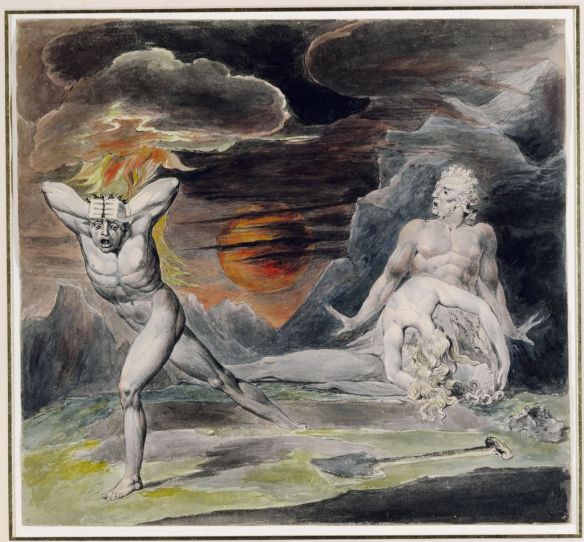
William Blake painting of “Cain fleeing from the wrath of God “as Adam and Eve look on in horror following the fratricide.

“God is hiding, too, Yahiel,” says the Rebbe. “God is crying because we have stopped searching.”

The Miracle of Donald Trump

A very long day

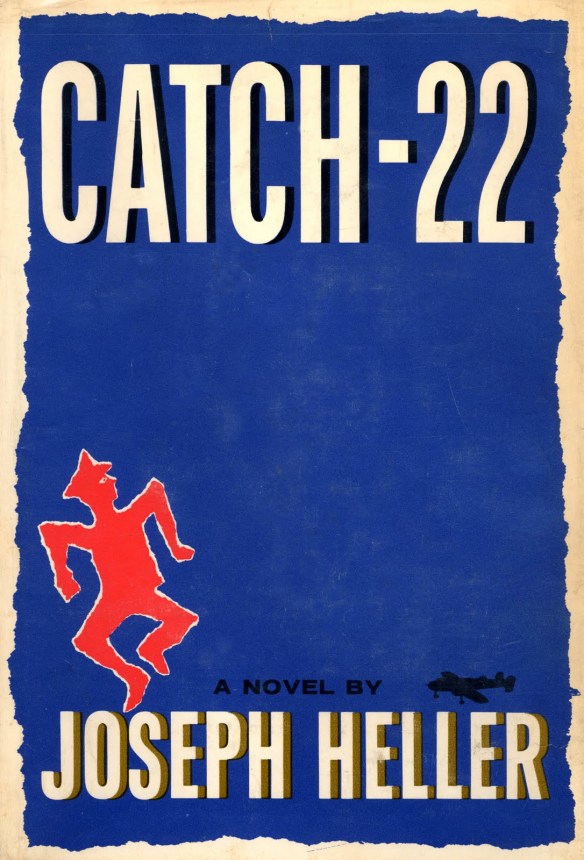
Joseph Heller’s character without character: Milo Minderbinder

Good fiction lifts the veil on reality,

The MAGA miracle of Donald Trump walking on water.

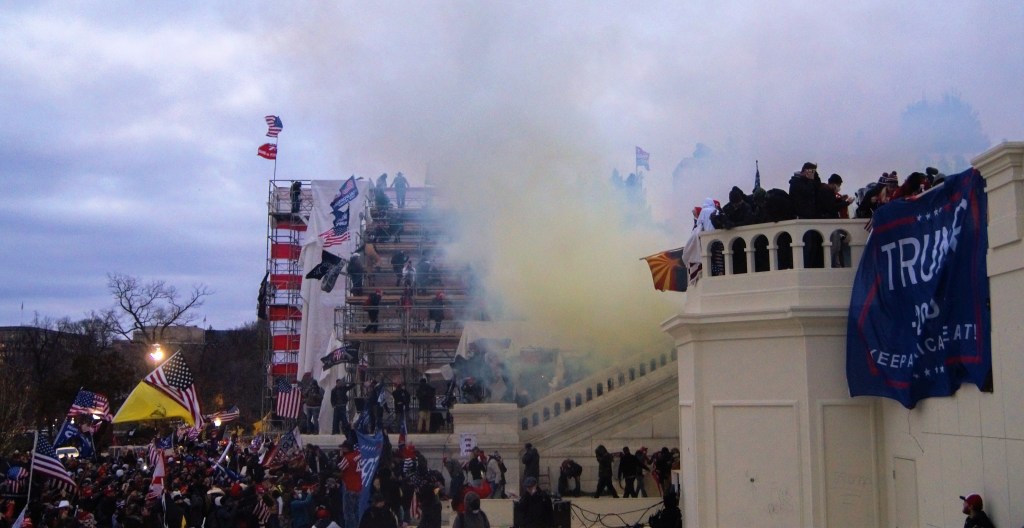
It takes a character like that to lead others to see you as a miracle, as happened in the Weimar Republic of Germany on Feb. 27, 1933, when the Reichstag (Parliament building) went up in flames. It happened a month after Hitler became Chancellor. Hitler and his devotees blamed the Communists.

Criminal Insanity requires no character

Fiction and reality

Donald Trump and Elon Musk in a hospital for the criminally insane, setting fire to the Constitution

Get up and walk around

PRESIDENTS DAY 2025: Flowers or Thistles

President Abraham Lincoln (first DEI president) and Sojourner Truth

Lincoln’s Character


When there is no character

Die when I may,
I want it said of me
by those who know me best,
that I have always
plucked a flower
and planted a thistle
where I thought a thistle
would grow.

Where have all the flowers gone?

Gordon C. Stewart, Brooklyn Park, Minnesota, Presidents Day, Feb. 17, 2025

A Plea for Conscience and Duty

The OATH-BREAKER and the Oath-Keepers

Taking the Oath with One Hand

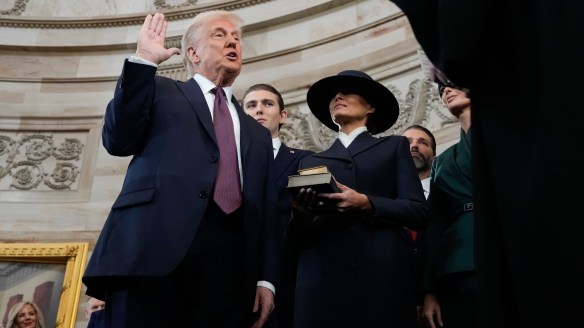
Donald Trump oath-taking with one hand.
Taking the oath with one hand.

Does Nothing Mean Anything Anymore?

The Dark Power of Propaganda in Anxious Times

Video

Reader’s Comment

I no longer wonder. I think I know

photo of Professor Willem Zuurdeeg
Gordon C. Stewart, Public theologian, author of Be Still! Departure from Collective Madness (2017, Wipf & Stock), 49 brief, stand-alone meditations on faith and public life. Brooklyn Park, Minnesota, January 14, 2024.

Oaths of Office: A Constitutional Dilemma

Inauguration 2026
2017 Inauguration

Supreme Court Justice Oath of Office

Question

Rhetorical or Serious?

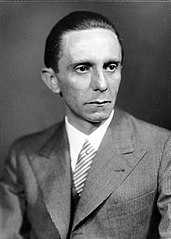
The question seems rhetorical. It’s not. It’s serious. On January 20, 2025, the former president who violated election law by silencing a porn star, burying the story in a deal with a gossip tabloid; refused to honor the Constitutional peaceful transfer of power in 2021 and rallied the Proud Boys, Oath Keepers, and his supporters in a violent insurrection that threatened his own Vice President‘s life; promised to pardon the January 6 insurrectionists; mastered the five principles of effective propaganda outlined by Third Reich Minister of Propaganda and Enlightenment Josef Goebbels; maneuvered the rule of law to evade trial; denounced the American justice system, courts, judges, prosecutors and court personnel as “rigged” against him; refused to surrender top secret national security documents after leaving office; and who continues to mock the juries that convicted him, and to use the powers of the presidency to exact retribution–– courts-marshal, imprisonment, or execution for treason––stood before Chief Justice John Roberts, ‘forgot’ to place his hand on two Bibles, raised the other hand, and “solemnly swore” the oath he had given no reason to trust.

Subversion by any other name is still subversion


Those who do not remember their history are doomed to repeat it

Following the death of President von Hindenburg in August 1934, Adolf Hitler assumed power as Reich Chancellor and Führer. Shortly thereafter, on August 20, 1934, the longstanding oath taken by state officials was changed so that they no longer swore loyalty to the German constitution but rather to Hitler as head of state.

Oath of Loyalty for All State Officials as of August 14, 1919: “I swear loyalty to the Constitution, obedience to the law, and conscientious fulfillment of the duties of my office, so help me God.”
[Translated from Reichsgesetzblatt I, 1919, pp. 1419-1420.]

Oath of Loyalty for All State Officials as of August 20, 1934: “I swear I will be true and obedient to the Führer of the German Reich and people, Adolf Hitler, observe the law, and conscientiously fulfill the duties of my office, so help me God.”
[Translated from Reichsgesetzblatt I, 1934, p. 785.

Is one’s word one’s bond? Or is it subterfuge?

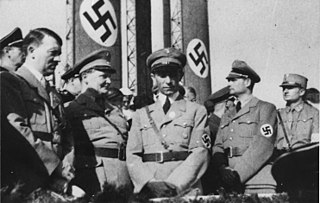
The Hierarchy:: Adolf Hitler (L), Joseph Goebbels C), Hermann Goering (R)
Gordon C. Stewart, public theologian, Presbyterian Minister (HR), author of Be Still! Departure from Collective Madness (2017, Wipf and Stock), Brooklyn Park, MN, January 13, 2024.